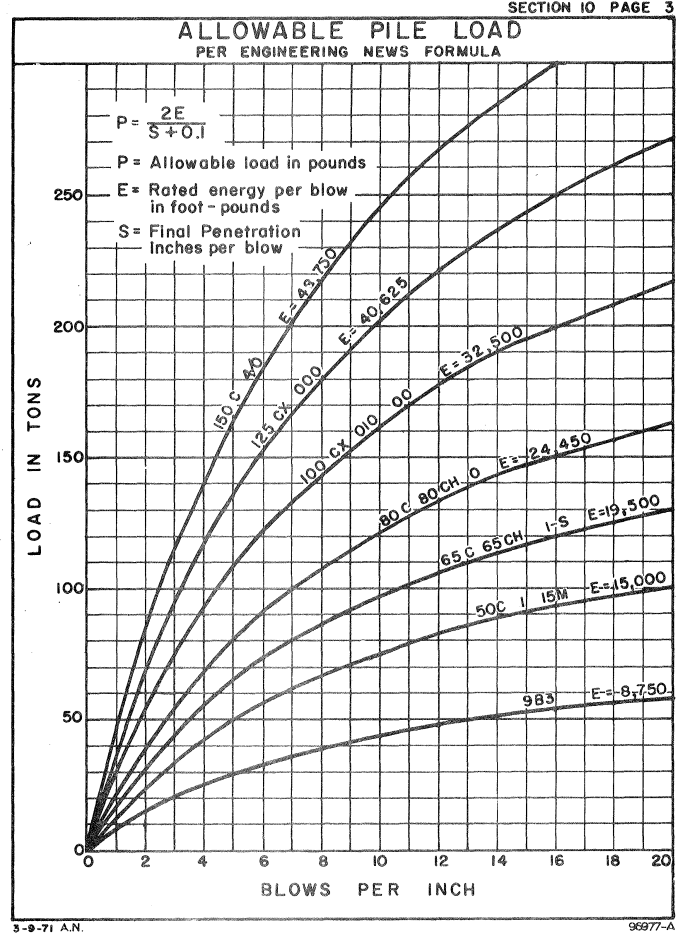
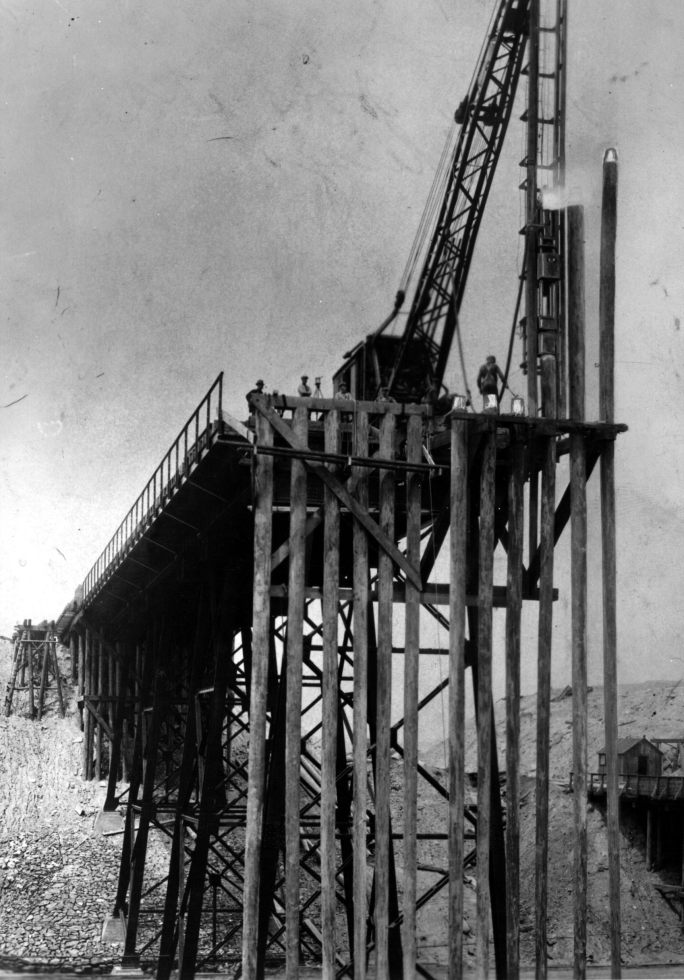
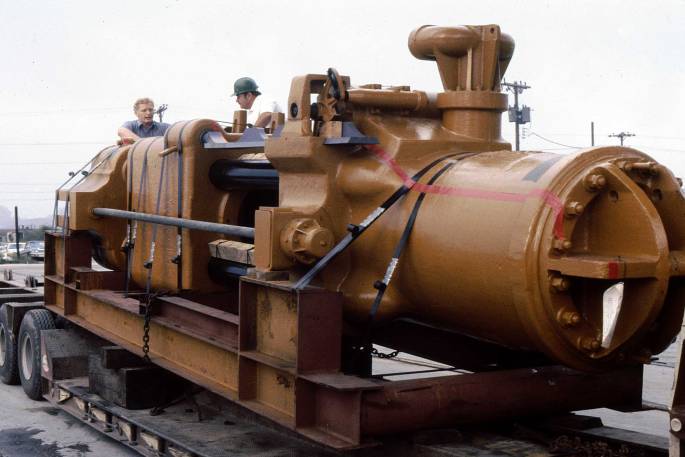
For many years the main method of drivability/resistance correlation were the dynamic formulae. It's interesting that the Engineering News formula and the Vulcan #1 hammer came into the world at about the same time. Vulcan featured the Engineering News formula in its literature as early as 1906, and this continued until the 1970's. We explore … Continue reading Vulcan and Dynamic Formulae
The Engineering News Formula, and Its Treatment in Early Vulcan Literature
The results from the Martello Castle/Proctorsville project and other works demonstrated the weaknesses of the dynamic formulae. Although other formulas would be devised, the 29 December 1888 edition of Engineering News would change everything. Arthur Mellen Wellington, another prominent American civil engineer, published a formula that would dominate pile dynamics (in the US, at least) … Continue reading The Engineering News Formula, and Its Treatment in Early Vulcan Literature
Before Wellington and ENR: Early Dynamic Formulae, and Sanders’ Formula
Most treatments of dynamic formulae begin with the Engineering News Formula, proposed by A.M. Wellington in 1888 (about the time the first Vulcan #2 was produced.) But activity in this field had been going on for a long time before that. As Robert Chellis noted in his book Pile Foundations, the first pile driving formula … Continue reading Before Wellington and ENR: Early Dynamic Formulae, and Sanders’ Formula
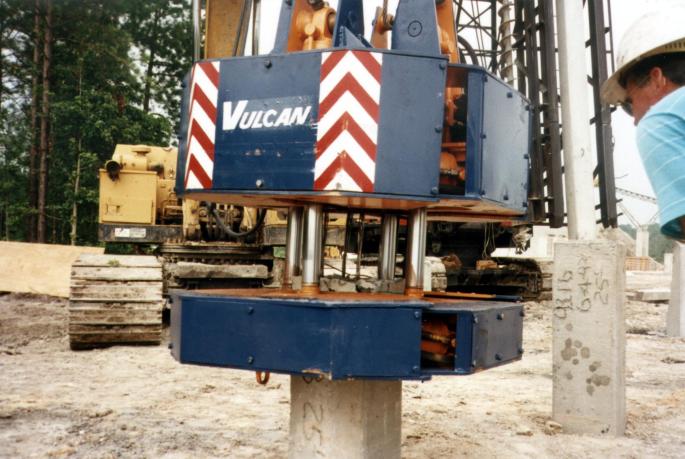
Engineering at Vulcan
Vulcan would have never endured as long as it did without a properly engineered product, especially in the punishing environment of impact pile driving equipment. There is a great deal of technical information on this site; here we give a glimpse as to how much of it came into being. There are special sections on … Continue reading Engineering at Vulcan
Vulcan Iron Works: The Company
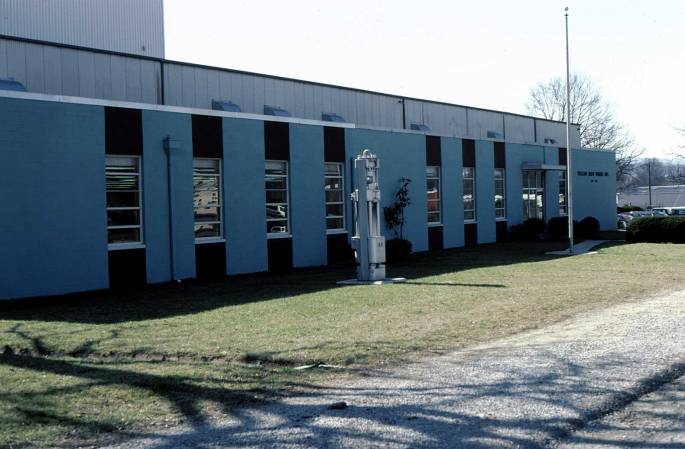
Vulcan had a long and interesting history. Some of that is documented below: Vulcan: The First 100 Years A history in words and photos of Vulcan's first century of existence Vulcan Iron Works Centennial Celebration Vulcan: The Offshore Experience A comprehensive view of Vulcan and its offshore hammers Product Bulletins: a list of the literature … Continue reading Vulcan Iron Works: The Company
Vulcan Patents
Vulcan S/N 463, manufactured in 1908, sporting its then valid patent...wait, the patent number's wrong, it should be 378,745, as you can see below. Vulcan was an innovator in pile driving equipment for more than a century. This history can be documented in part by the patents that were issued to Vulcan's people, in addition … Continue reading Vulcan Patents
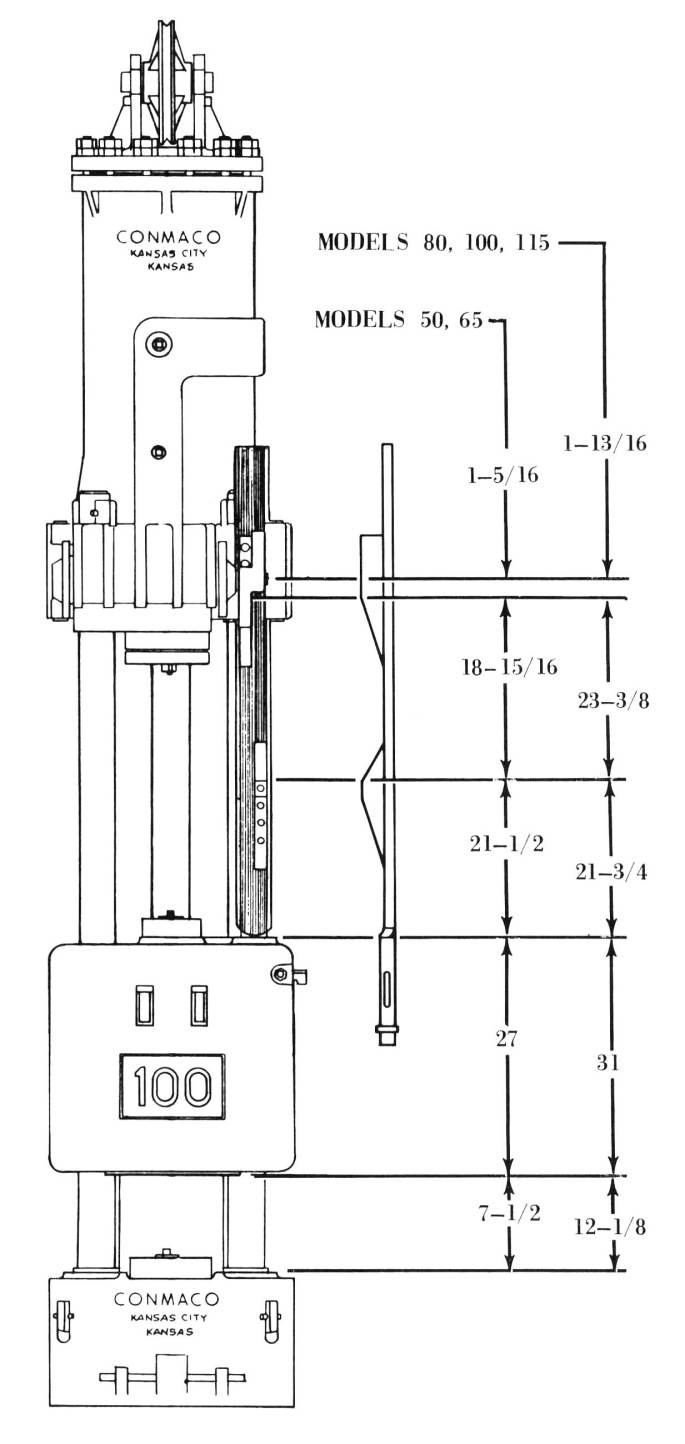
Conmaco
Conmaco 300 hammer at Vulcan's facility in Chattanooga, where it was manufactured (see below.) Vulcan’s success in its product lines inspired imitators. One of the most significant of those came from its own distributor network—Conmaco. The relationship between the two companies was as complicated of a business as one could want, both together and apart. … Continue reading Conmaco
Vulcan vs. the Machinists’ Union: The Turkey Grievance
Although Vulcan's relationship with the Machinists' trade union at its Chattanooga facility was generally reasonable as such things go, every now and then conflict would arise outside of the triennial (usually) contract negotiations. Probably the most significant of these conflicts--and certainly the best publicised--was the "Turkey Grievance" in 1981. It's a good way to illustrate … Continue reading Vulcan vs. the Machinists’ Union: The Turkey Grievance
New Method and Device for Breaking and Removal of Protruding Pile Parts
L.V. Erofeev, VNIIstroidormash V.A. Nifontov, VNIIstroidormash D.A. Trifonov-Yakovlev, VNIIstroidormash D.C. Warrington, Vulcan Iron Works Inc. This article first appeared in the First June 1993 issue of Pile Buck, and is reproduced here with some updates. Related information is as follows: Click here for trip reports of the one test of this device in North America. … Continue reading New Method and Device for Breaking and Removal of Protruding Pile Parts
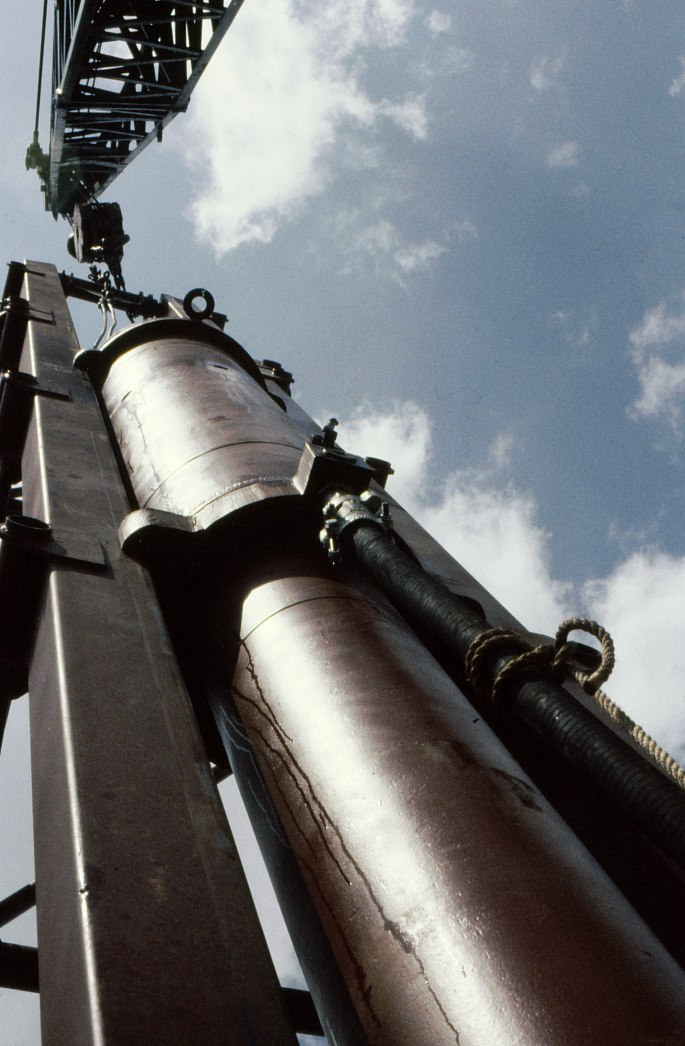
Single-Compound Hammer
Although Vulcan never placed it into production, the Single-Compound hammer was one of Vulcan's more interesting experimental hammers, and under different market circumstances has the potential of success. Although a general long-term success, Vulcan always recognised that the product life of the air/steam hammer line wasn't infinite, especially offshore. Given the difficulties of developing an … Continue reading Single-Compound Hammer