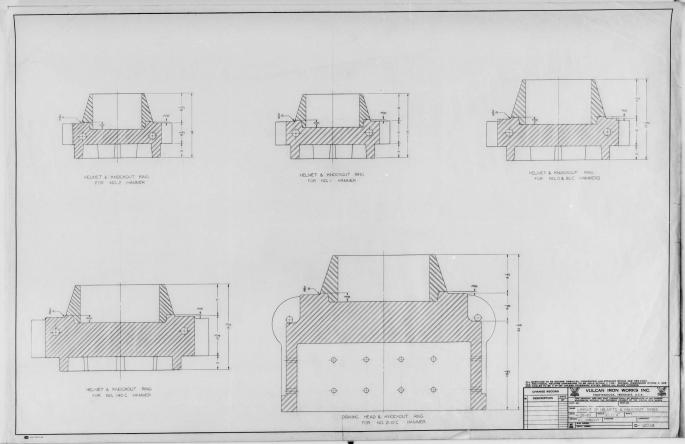
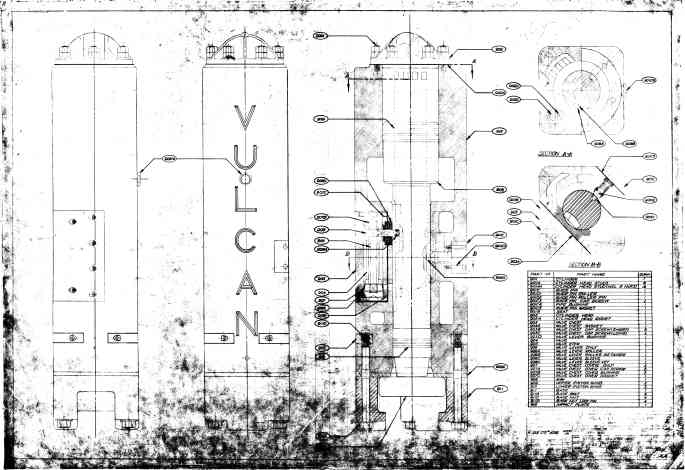
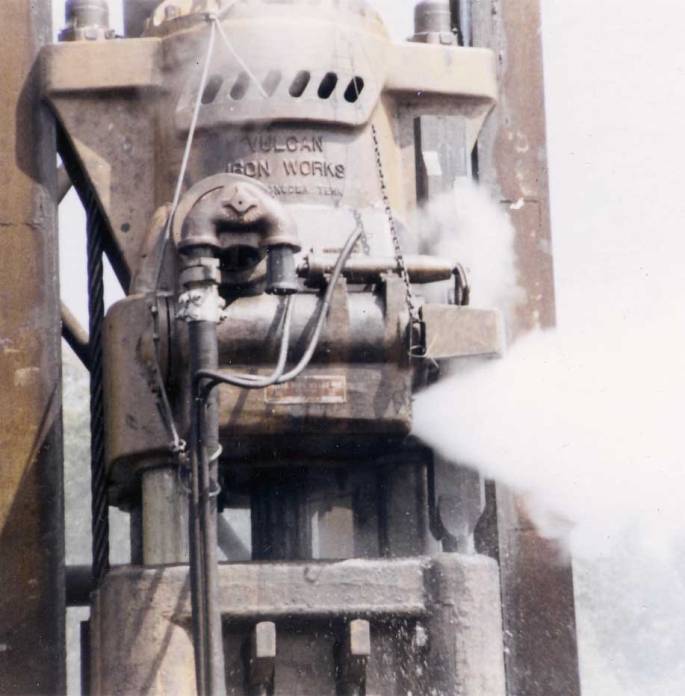
Above is a chart from 1965 of knockout rings for Vulcan hammers from the #2 to the 020/200C series. The knockout ring is, in some way, a short version of the capblock follower/shield for softer cushion materials. It replaces the integral ring which has been standard on Vulcan hammers. (Some explanation of both is here.) … Continue reading Knockout Rings, Large and Small
Vulcan’s Blow Count Specifications
The durability and longevity of Vulcan pile hammer is something that is seldom replicated in just about any other manufactured product. Since pile driving is self-destructive on the equipment, this is a remarkable achievement, but it should be tempered by the fact that it's possible to render a Vulcan hammer inoperable by the way it's … Continue reading Vulcan’s Blow Count Specifications
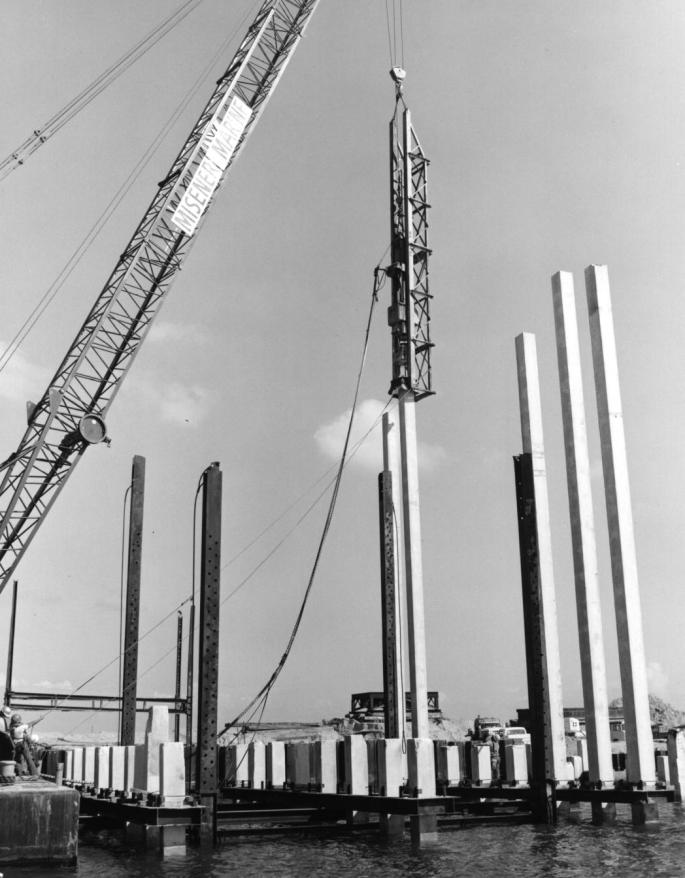
Driving Piles with Stub Leaders and a Template
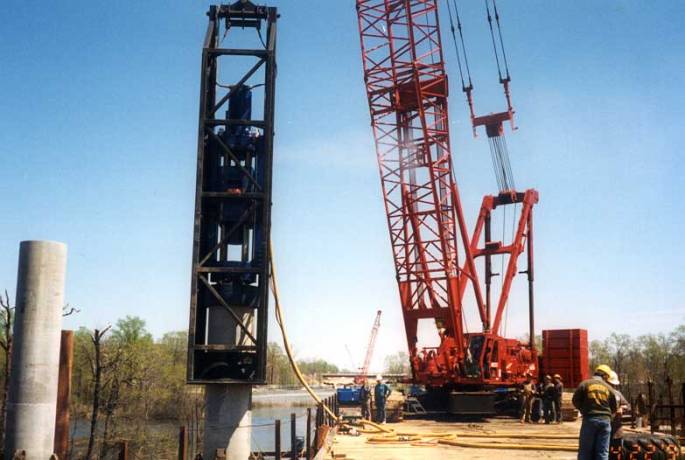
The best known setup for pile driving equipment is a crane and a set of full-length (of the pile and hammer) leaders, attached to the crane in a variety of ways. But another alternative is to use a "stub" leader, i.e., one that is very short, and a template to align, position and guide the … Continue reading Driving Piles with Stub Leaders and a Template
Vulcan’s Most Famous Sheet Piling/Extractor Photo
The photo above, dating from 1949, shows a worker tightening the bolts on the connecting links of a Vulcan extractor to the top of a prepared sheet piling in preparation to impact the sheeting upwards and take it out. This photo was used for many years in Vulcan literature, including Vulcan Bulletin 71B. (Note: don't … Continue reading Vulcan’s Most Famous Sheet Piling/Extractor Photo
Parts Diagram for DGH-900 Hammer
Above is a parts diagram for the Vulcan DGH-900 hammer, from the late 1950's. It's similar to the DGH-100 hammer. More information about these hammers is here. The complete Field Service Manual for both DGH series hammers is in the vulcanhammer.info Guide to Pile Driving Equipment.
Direction for Setting Column Keys
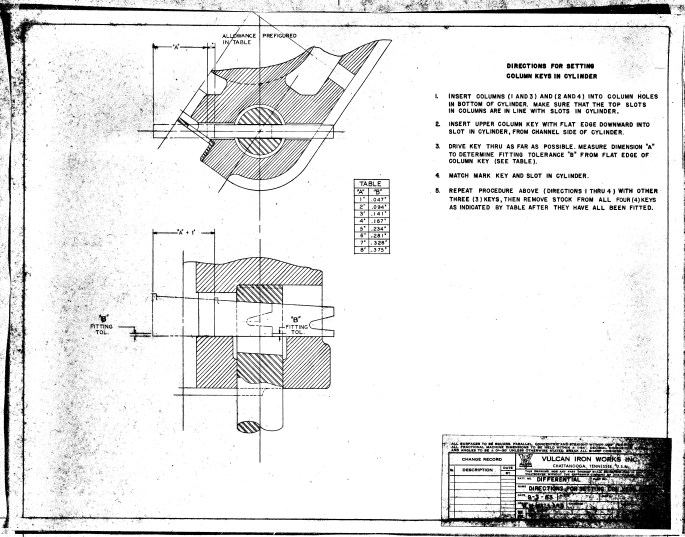
For those of you who still have column keys on your Vulcan hammer, these are diagrams for setting them, from 1963. The cylinder keys are shown above and the base keys are shown below. More on base column keys is here.
An Overview of Tapered Pipe Threads, and Their Application at Vulcan
It's hard to imagine that much of our technology is underpinned by very old, basic standards that year after year simply "do their job" without much regard. One of those is tapered pipe threads. This is a brief overview of same, and specifically the "National Pipe Taper" or NPT threads. Much of this material comes … Continue reading An Overview of Tapered Pipe Threads, and Their Application at Vulcan
Pile Buck Ads 5: Vulcan 530 in Offshore Leaders — vulcanhammer.net
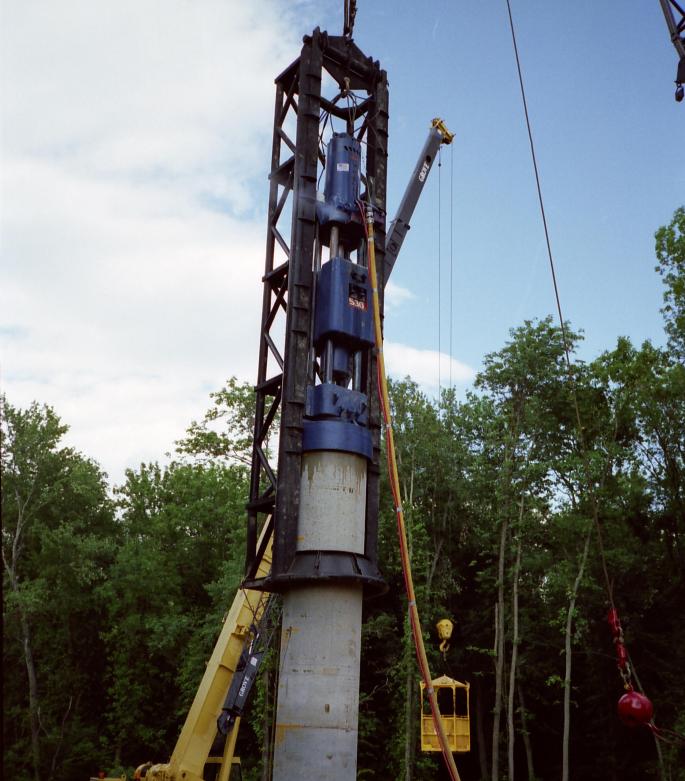
For the last of the “Pile Buck Ads,” a photo of the Vulcan 530 hammer is featured in offshore stub-type leaders. The 530, introduced in 1978 for driving pipe piles offshore in the Gulf of Mexico, was and is used in a wide variety of pile driving projects. In this case it’s shown to be […] … Continue reading Pile Buck Ads 5: Vulcan 530 in Offshore Leaders — vulcanhammer.net
Hong Kong and the Straits of Hormuz: It’s Amazing It Took This Long
Although Vulcan exported its pile driving equipment from the start, it was it's foray into the offshore oil business that gave Vulcan a truly international perspective. That perspective put some of the world's "hot spots" into its field of interest, and two of them are very active these days: Hong Kong and the Straits of … Continue reading Hong Kong and the Straits of Hormuz: It’s Amazing It Took This Long
Pile Buck Ads 4: Link Belt Diesel with a Mandrel — vulcanhammer.net
The fourth in our series on the ads which Pile Buck allowed vulcanhammer.net to run was this shot of a Link Belt 520 driving shell piles using the Vulcan Expanding Mandrel. The mandrel’s history and shell piles in general are discussed here. The Link Belt 520 is an interesting story in itself. The diesel […] via … Continue reading Pile Buck Ads 4: Link Belt Diesel with a Mandrel — vulcanhammer.net