Anchored Sheet Pile Wall Analysis Using Fixed End Method Without Estimation of Point of Contraflexure

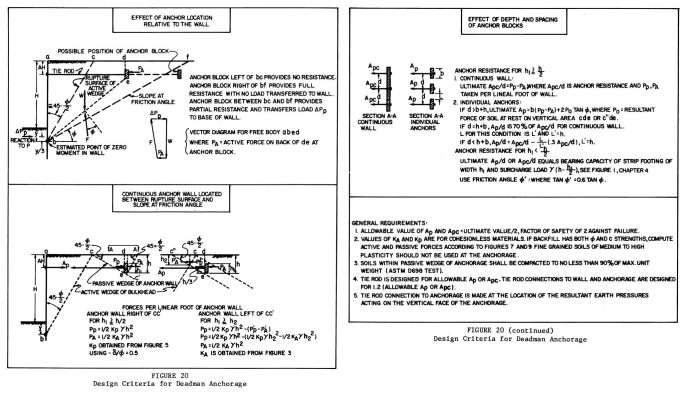
The monograph Anchored Sheet Pile Wall Analysis Using Fixed End Method Without Estimation of Point of Contraflexure, which appeared on this site very early in its existence (October 2007) has been very popular.  The online routine described in the report, which you can use, is no longer available.  The abstract for the paper is found here: … Continue reading Anchored Sheet Pile Wall Analysis Using Fixed End Method Without Estimation of Point of Contraflexure
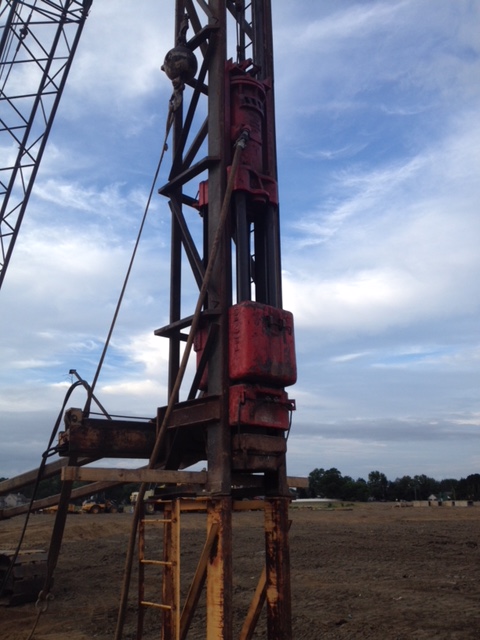
Vulcan #1 Hammer in Ohio

Below are three photos taken of a Vulcan #1 hammer in Mentor, Ohio.  It's in fixed leaders with a moonbeam-style spotter.  The hammer was made in Chicago, which means that it's probably older than sixty years.  Thanks to Ken Foster for sharing these great photos.

Compressible Flow Through Nozzles, and the Vulcan 06 Valve

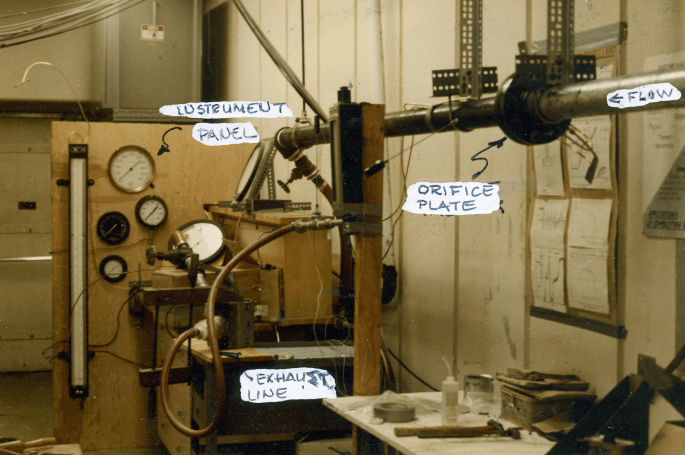
Most of our fluid mechanics offerings are on our companion site, Chet Aero Marine.  This topic, and the way we plan to treat it, is so intertwined with the history of Vulcan's product line that we're posting it here.  Hopefully it will be useful in understanding both.  It's a offshoot of Vulcan's valve loss study … Continue reading Compressible Flow Through Nozzles, and the Vulcan 06 Valve

Soviet S-834 Impact-Vibration Hammer: Calculations, Part II

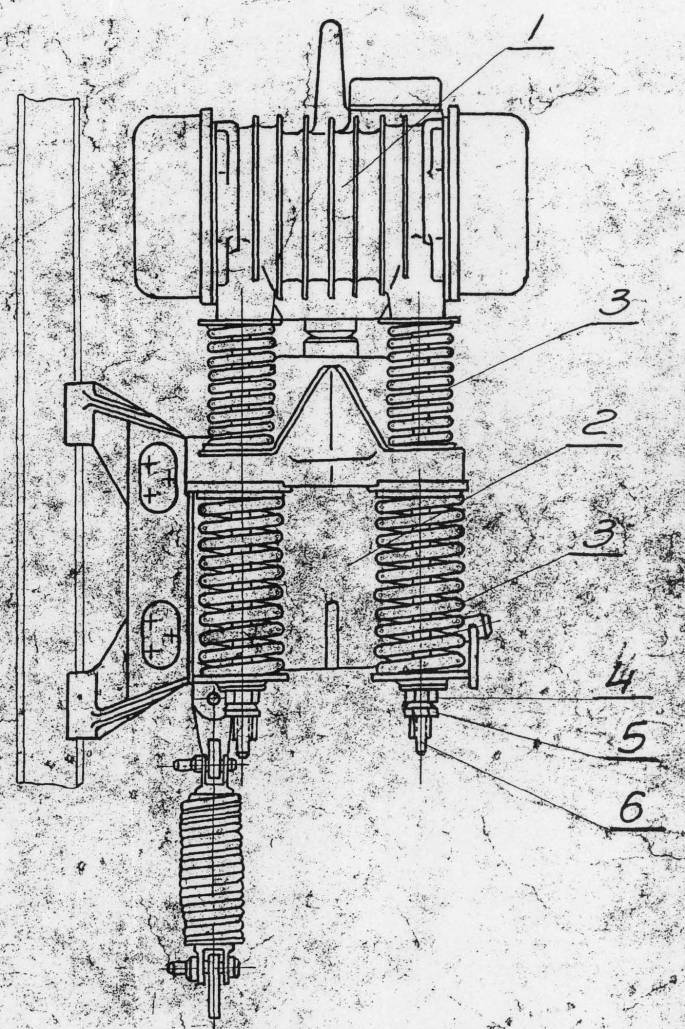
The introduction to this series is here.  The first installment of the calculations is here. Calculations of Main Details (Strength Calculations) Strength calculations assume that the inertial forces during impact are 150 times those of the weight. Rotor Shaft We checked the rotor shaft strength in the optimal mode, i.e., when the impacting force direction … Continue reading Soviet S-834 Impact-Vibration Hammer: Calculations, Part II

Soviet S-834 Impact-Vibration Hammer: Calculations, Part I

The introduction to this series is here. Moscow, 1963 Head of the Vibrating Machine Department L. PetrunkinHead of Vibration Machine Construction: I. FriedmanCompiler: V. Morgailo and Krakinovskii Specification The impact-vibration hammer is intended for driving heavy sheet piles up to 30 cm in diameter as well as concrete piles 25 cm square up to a … Continue reading Soviet S-834 Impact-Vibration Hammer: Calculations, Part I

Soviet S-834 Impact-Vibration Hammer: Overview

With this we begin a series of posts on the S-834 impact-vibration hammer, which the VNIIstroidormash institute in Moscow designed and produced in the early 1960's.  With the revived interest in Soviet and Russian technology, it's a detailed look at how Soviet equipment designers came up with an equipment configuration.  But it's also a close-up … Continue reading Soviet S-834 Impact-Vibration Hammer: Overview

The Valve Loss Study

All fluid flow in Vulcan hammers is regulated and directed by a valve.  For most Vulcan hammers (the California series being a notable exception, the #5 is another) the valve is a Corliss type valve modified from those used in steam engines.  Simple and reliable, it, like any other valve, is subject to losses as … Continue reading The Valve Loss Study

TAMWAVE: Cavity Expansion Theory and Soil Set-Up

One of the things that was attempted in the TAMWAVE project is the use of cavity expansion theory to estimate soil set-up in cohesive soils. Doing this, however, brought some complications that need some explanation. Cavity expansion theory is basically the study of what happens when one body expands inside of another. When this takes […] … Continue reading TAMWAVE: Cavity Expansion Theory and Soil Set-Up

Vulcan at the Circus: the 1200A Extractor

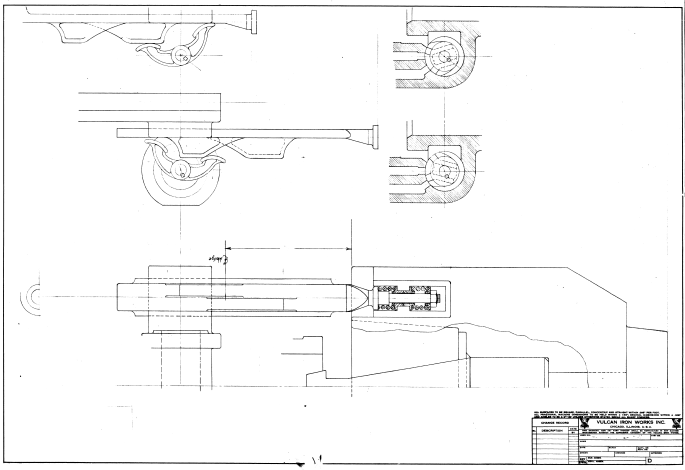
Vulcan had introduced its extractor line in the late 1920's, after several design iterations.  They had proven successful; for example, they were used in the construction of the original Tennessee Valley Authority systems of locks and dams.  But, as is often the case with pile driving equipment, what contractors wanted could be summed up in … Continue reading Vulcan at the Circus: the 1200A Extractor

Analyzing Sheet Pile Walls with SPW 2006: Part III, Anchored Walls and Some General Comments

In the last post we looked at the SPW 2006 program analyze cantilever walls.  In this post we will look at anchored walls, which are commonly seen with permanent works.  The program, along with the example problem at hand, is here.  Some instructions on the basic working of the program is here. The problem we'll … Continue reading Analyzing Sheet Pile Walls with SPW 2006: Part III, Anchored Walls and Some General Comments