The “Vulcan Overview”: Unravelling Its Mysteries

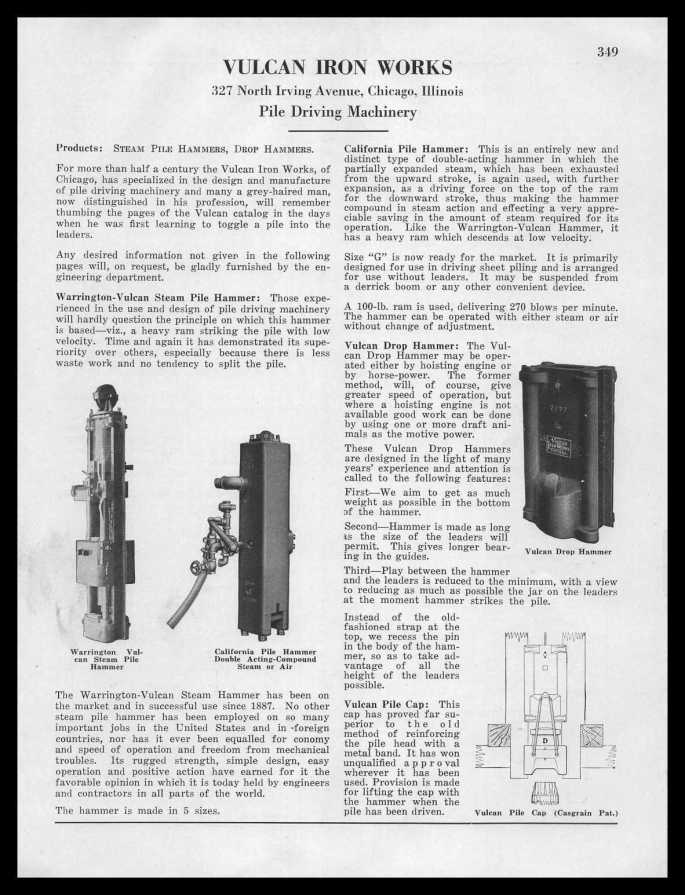
A digital copy of the advertisement above came into my possession recently. Much of the development of this site has involved research and some educated (hopefully) guesswork as to the date and purpose of a drawing, photograph or other document. This one raises some interesting questions in a number of ways which we will explore. … Continue reading The “Vulcan Overview”: Unravelling Its Mysteries
Restoring The Productivity Of Water Wells During Their Development And Repair

For more of this book, click here. The main method for constructing wells in water depths exceeding 100โ€“150 meters is rotary drilling with clay mud flushing of the borehole. During the development of wells drilled using the rotary method, it is necessary to remove the clay particles of the flushing fluid from the near-filter zone … Continue reading Restoring The Productivity Of Water Wells During Their Development And Repair

George Goble’s 2007 Terzaghi Lecture

The GeoInstitute has chosen to feature George Goble's Terzaghi Lecture, it's here: https://youtu.be/ujXSyvB4iPc?si=6xdRze61jFt-KiFf He covers the waterfront (complete with a major marine project) on the WEAP/CAPWAP method of pile dynamics. The methods he and his colleagues pioneered have become standard in driven pile practice. I have a few comments on the lecture as follows: He … Continue reading George Goble’s 2007 Terzaghi Lecture

Goodrich (1908): The First Instrumented Pile?

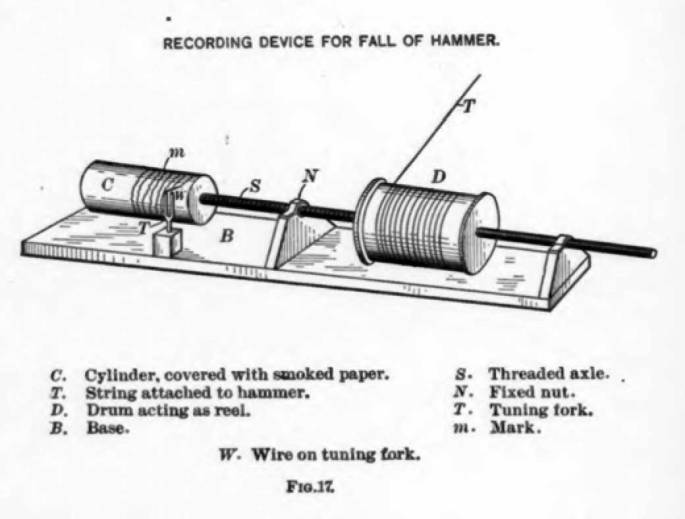
The results of the Proctorsville project showed that our understanding of the mechanics of pile drivingโ€”and of the load transfer mechanism between pile and soil during and after installationโ€”left a great deal to be desired. The solution to the problem was to instrument the pile driving process. Such an effort was documented in the 1908 … Continue reading Goodrich (1908): The First Instrumented Pile?

Comments on “Nonlinear fictitious-soil pile model for pile high-strain dynamic analysis” and “Fictitious soil pile model for dynamic analysis of pipe piles under high strain conditions”

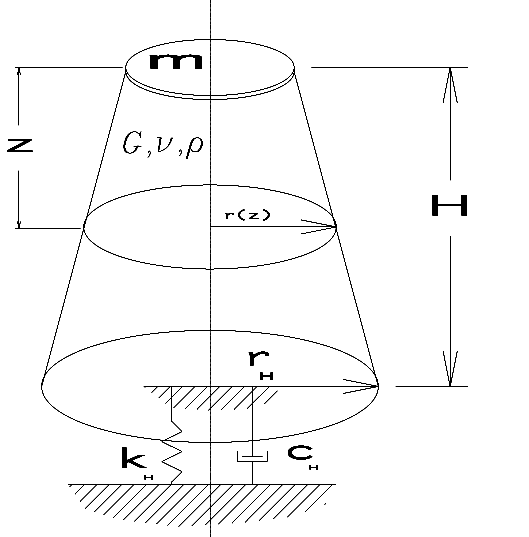
It's my custom to review papers which cite my own work. This pair of papers, whose lead author is Tu Yuan from Zhejiang Sci-Tech University in Hangzhou, China, is interesting because it take an approach whose basic concept goes back a long way in pile dynamics and which needed some basic advancement. The two papers … Continue reading Comments on “Nonlinear fictitious-soil pile model for pile high-strain dynamic analysis” and “Fictitious soil pile model for dynamic analysis of pipe piles under high strain conditions”

Diesel Hammers: Vulcan Series II Diesel Hammers

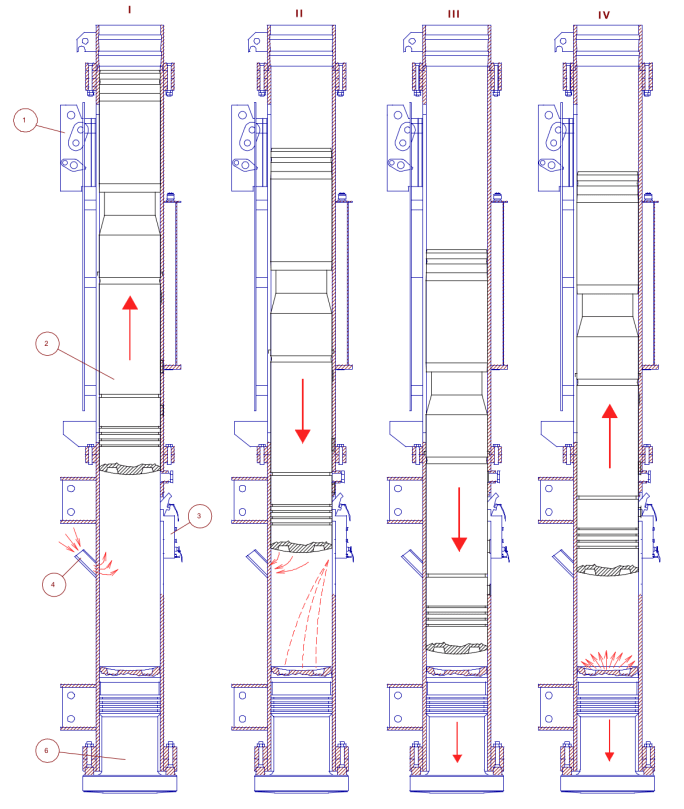
First, we need to review what we've learned from our previous posts on diesel hammers. First, the posts themselves: Diesel Hammers: Rated Striking Energy, and Should Diesel Hammers Be Derated? Diesel Hammers: Delmag, Nilens and the Method of Analysis Diesel Hammers: The Russian Hammers and Hemi-Headed Pile Drivers Diesel Hammers: Pileco Now we can discuss what we have … Continue reading Diesel Hammers: Vulcan Series II Diesel Hammers

Diesel Hammers: Delmag, Nilens and the Method of Analysis

The classic Delmag diesel hammer, a D-30, early 1990's. In Diesel Hammers: Some Basic Thermodynamics, and the Mean Effective Pressure it was noted that the diesel hammers were developed in Germany between the World Wars. The Germans went to war the second time with diesel hammers in hand to aid their war effort. (The U.S. did … Continue reading Diesel Hammers: Delmag, Nilens and the Method of Analysis