
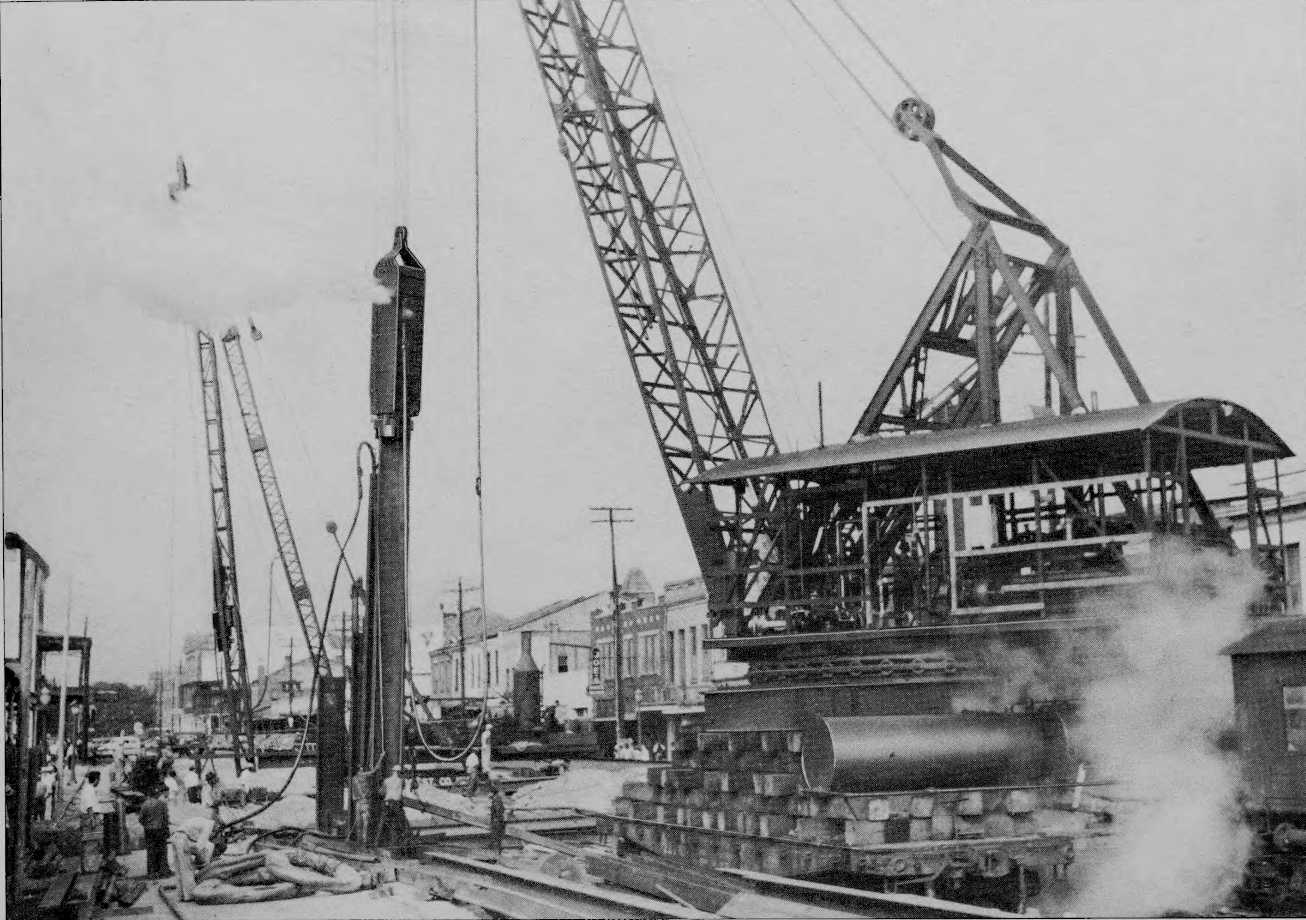
Vulcan found McKiernan-Terry to be their most formidable competitor, but there were others. One of those was the Union Iron Works, located in northern New Jersey. The catalogue for Union is here for download. An overview of the Union hammers is below.
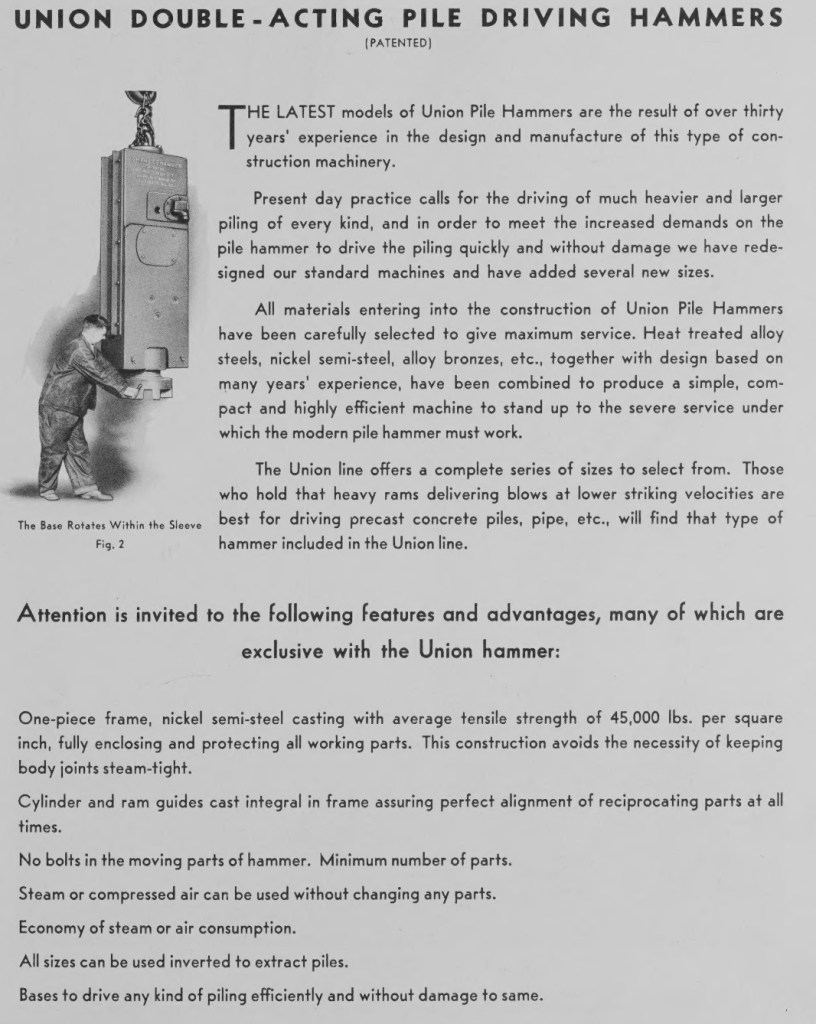
Specifications for these hammers follow.
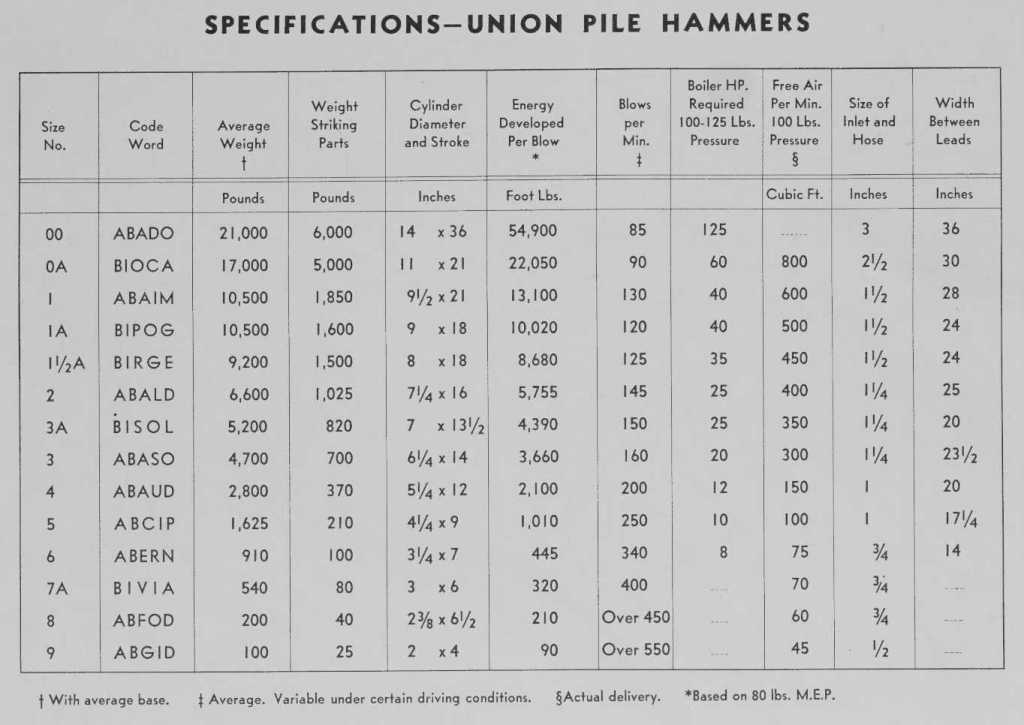
Hammers manufactured by Union Iron Works appear in Carnegie Steel’s 1912 catalogue of sheet pile sections as the “Arnott” hammers. Steam hammers were identified by their design origin; the Warrington-Vulcan design was a development of the Naysmith hammers, the original steam hammer. They also appear in Jacoby and Davis’ Foundations of Bridges and Buildings (1914). Union’s hammers were all double acting.
Looking at them, one sees the resemblance to the McKiernan-Terry hammers, who were their cross-town rivals. The ram is hidden and, combined with the double action, made the hammer’s output energy more problematic in an era when inspectors could look at a Warrington-Vulcan hammer and see the stroke of the ram. Being away from the greater New York area probably helped Vulcan vs. Union; Union was probably overtaken by a rival with a larger product line.
Vulcan listed Union hammers in their Data Manual in the early 1960’s, but by then Union’s presence in the market had all but dissappeared.
Union’s catalogue listed them as a division of Lidgerwood Manufacturing Company. Today this company operates as Superior-Lidgerwood-Mundy Co (SLM), headquartered in Superior, WI, and producing a wide variety of construction and other heavy equipment.


