
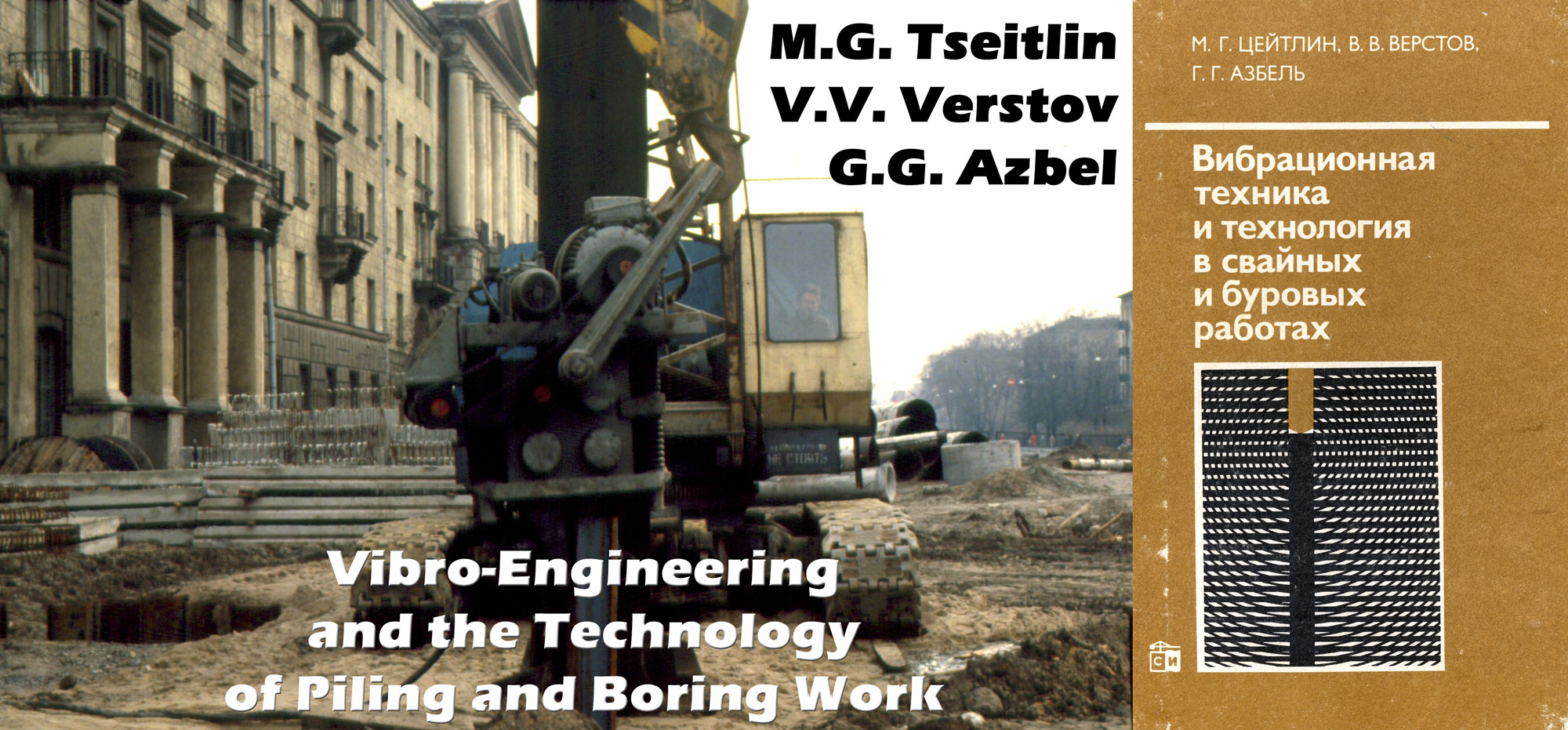
Today I finally finished the translation of the body of Vibro-Engineering and the Technology of Piling and Boring Work. It took long enough (it started with the translation of part of the book by Language Services in Knoxville in the early 1990’s) but at last it’s done. The last two chapters were done with the explicit help of artificial intelligence (AI.) It’s the first time I’ve done a major effort with AI and I’d like to share some observations about using AI and whether it’s as revolutionary as everyone says it is.
How I Did It Before
It’s probably a good idea to back up and look at the way I did it “before” AI (I’ll explain the quotes later) and then compare it with how these last chapters were translated.
The first work I translated and put online was Jaques Benigne-Bossuet’s Elevations on the Mysteries, which itself took seven years (as I document in this piece.) The procedure was as follows:
- Get the text into data format. In the case of the Elevations that was superficially straightforward because there were editions on the Internet Archive, and most of those had already had OCR on the text. It was “superficially” because OCR for the many documents Google and others did during the 2000’s isn’t the greatest, and I found myself correcting numerous errors in the text. The elevations also had a newer edition in French, which I used to update the translation using, as they say, a more “critical text.”
- Translate it using Google Translate. In the early portions of the translation I did it all myself but in the later I employed Google Translate. I had to do this in small pieces because trying to do it in bulk (say, asking Google to do it on a Google Doc) reduced the quality of the translation.
- Go through the translation and fix it. It’s true that the translation was fairly literal; in some cases that was okay and others it wasn’t, so I sifted through it to make it as good as I could.
- Upload it elevation by elevation to the blog.
In the middle of this it became apparent that I could apply the same technique to Vibro-Engineering and the Technology of Piling and Boring Work. I started with the parts that Language Services had already translated. In 2017 those were posted on this site, which was the same year it transitioned to wordpress.com. Six years later I began the translation of The Vibration Method of Driving Piles and Its Use in Construction, which is the classic work on the subject, using the method I had developed for Bossuet’s work with the following differences:
- I had to do my own scanning and OCR work into Russian, which I did using Adobe Acrobat CS2 or CS3 (I don’t rent software.) The OCR quality depended upon the quality of the original print, which (in good Soviet style) was wildly variable. This forced me to use Google Docs to correct the text, the result of which wasn’t bad considering I didn’t know Russian but was well familiar with the technology.
- Do the rest according to the procedure above, except that I had to prepare figures, tables and captions as well.
In the midst of this I resumed translation of Vibro-Engineering and the Technology of Piling and Boring Work, getting to the end of Chapter 4 of 6 before stopping. By the time I got around to finishing this translation earlier this month, I realised that AI had changed the landscape somewhat. The procedure I used for the last two chapters is as follows:
- Scan the text into images, spread by spread.
- Throw them at Google Search, which responds in several ways depending upon the notion it takes. That includes simply reproducing the text or a summary in Russian, giving a summary in English, or translating part or whole of the text. Google AI has a mind of its own and I found myself giving specific instructions as to what it was supposed to do. (I had employees like that…)
- Stitch the main body of the text together. Since it was given spread by spread, transitions from one to the other varied in quality, but that wasn’t a major problem.
- Prepare the figures. Google Lens isn’t quite up to “prime time” when it comes to translating text in tables, and only once did I find using it directly in the text. Also, the general rule in figures and tables is to call out the figure or table number once and then immediately present it in the text. Soviet practice was extremely variable in that regard, it took some untangling to get everything straight.
- Upload it to the blog, chapter by chapter.
In doing this I have the following observations:
- On the whole the translation quality was improved from what I had done before; I didn’t have to use short segments of text for translation. In this business the terminology isn’t particularly esoteric but common words get used in uncommon ways. In some cases I changed it and others I let it go; there is an abominable proliferation of ways to call things and procedures and I figured that the literal translation might be perfect for some and uninformative for others.
- Google has certainly been busy going to and fro on the internet, scouring it for content, and I found it matched the scans with other “similar” content, some more similar than others. Some of that content came from the earlier chapters of this work! If you put something on the open internet, rest assured they will vacuum it up and put in their knowledge base.
- As I said, Google Lens isn’t the greatest for translating text in figures and making it look proper.
AI isn’t magic and it hasn’t replaced human supervision. I think that AI of some kind has been used all along in this type of translation; it’s just that now it can read the text from a scanned copy, do the OCR and translate it in one shot. Hopefully more humans will take advantage of this to put works in one language into another, and that both humans and AI will learn from their effort.


One thought on “My Adventure with AI: Translating the Rest of “Vibro-Engineering and the Technology of Piling and Boring Work””