

In this post, we will see the book Moscow : A Short Guide by Vladimir Chernov. About the book To the reader This guide is a short account of Moscow and its principal points of interest for the foreign tourist who is visiting the city for the first time and has a limited time at […] … Continue reading Moscow : A Short Guide – Chernov — Mir Books

Checking the Soviets: Determining the Bending Moment and Stress, and the Parallel Axis Theorem
In this section we'll discuss the bending moment of the section which connects the two rotors. It's worth noting that, from a vibratory operational standpoint, the two sets of rotors and eccentrics and self-synchonising, which means that, as they rotate, the amplitude of the vibrations synchronise the rotations. This was applied to vibratory equipment by … Continue reading Checking the Soviets: Determining the Bending Moment and Stress, and the Parallel Axis Theorem
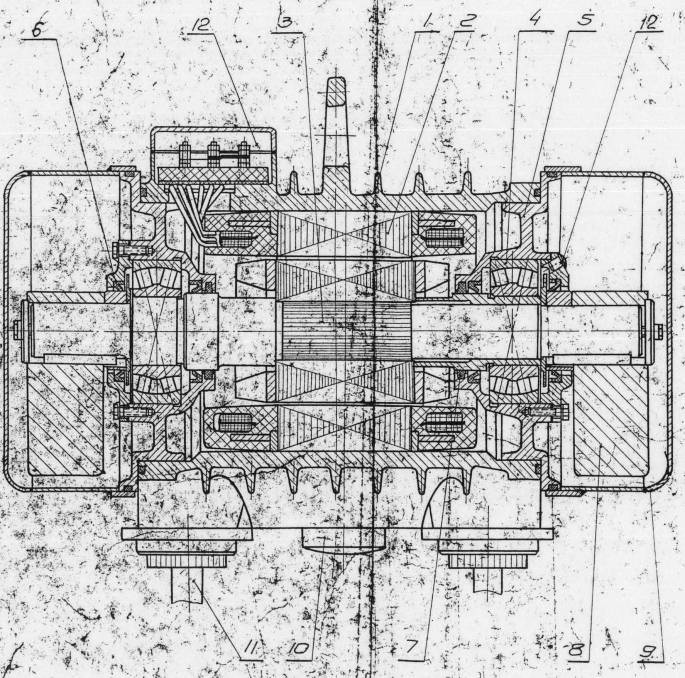
Checking the Soviets: Determining the Bending of the Shaft
In our last post Checking the Soviets: The Strange Case of the Spring Constants we discovered some discrepancies in the design of the springs which, although essentially correct, were hard to explain given the information furnished. In this analysis an entirely different problem is encountered, one which is more familiar to practicing engineers. The problem at … Continue reading Checking the Soviets: Determining the Bending of the Shaft
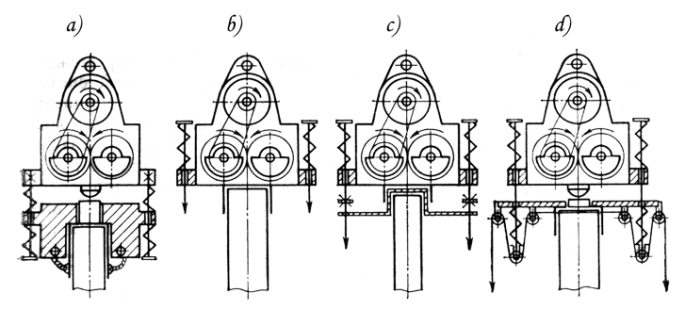
Checking the Soviets: The Strange Case of the Spring Constants
Now that we have established the basic parameters, we need to move on to the spring constant calculations. Here we run into some things that frankly don't make a lot of sense, perhaps the reader can help to resolve the dilemmas. The original calculations are here. Let's start by looking again at the basic impact-vibration … Continue reading Checking the Soviets: The Strange Case of the Spring Constants
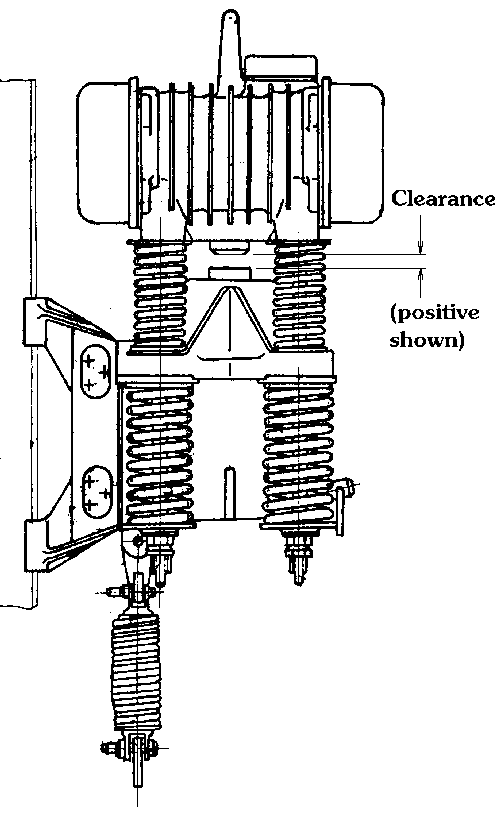
Checking the Soviets: Finding the Frequency and Establishing Basic Parameters
In our last post Checking the Soviets: A Tale of Two Cities we described the underlying institutions that designed and built impact-vibration equipment. Henceforth, based on this post we will refer to the two groups as the "Moscow" and "Leningrad" groups, to save the reader having to deal with the Cyrillic alphabet soup that Soviet institutions … Continue reading Checking the Soviets: Finding the Frequency and Establishing Basic Parameters
Checking the Soviets: A Tale of Two Cities
In our last post Checking the Soviets: Determining the Eccentric Moment, we looked at a specific calculation of the eccentric moment of an impact-vibration hammer. Before we get further into this topic, it would be good to pause and give some background on how the Soviets developed the impact-vibration hammer. Once it got out of its … Continue reading Checking the Soviets: A Tale of Two Cities

My Perspective on Driven Pile Drivability Studies
I originally posted this in 2013 on another forum. Recently I had a round of correspondence with a county official in Washington state re pile drivability studies and their place in the contract process. (If you're looking for some explanation of this, you can find it here). His question was as follows: During the bidding … Continue reading My Perspective on Driven Pile Drivability Studies
Checking the Soviets: Determining the Eccentric Moment
This is the first in an aperiodic series on design calculations for a piece of experimental Soviet construction equipment, in this case an S-834 impact-vibration hammer. A more complete history of these machines (a co-author was one of the designers) is here. We're going to compare the calculations originally done on these machines with what … Continue reading Checking the Soviets: Determining the Eccentric Moment
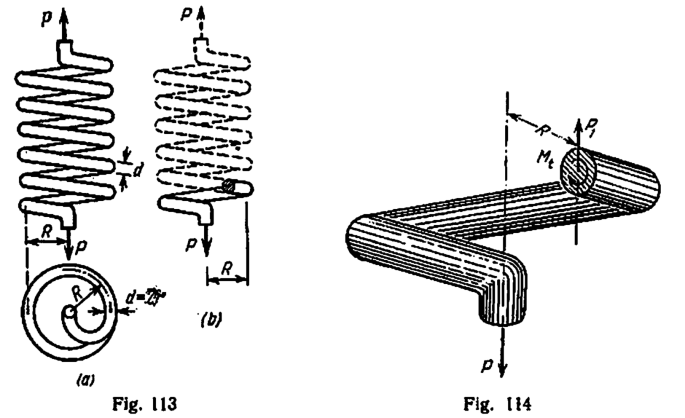
Analysis of Springs with Circular Cross Section
Coil springs never were a prominent part of most Vulcan hammers, but they did appear in spots and they are an important part of machine design. In this post we'll go over the basics of these, based on Belyaev and Juvinall and Marshek (1985). The basics of spring design and nomenclature. The springs shown in … Continue reading Analysis of Springs with Circular Cross Section
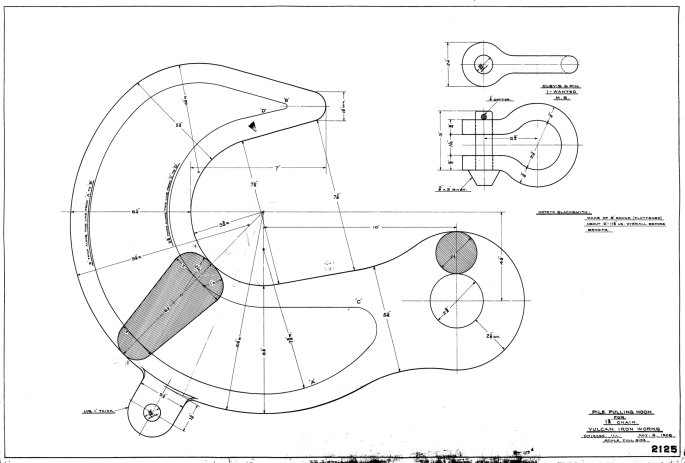
Curved Beam Analysis on a Hand-Forged, Non-Rectangular Cross Section
In a recent post I discussed curved beam analysis with a rectangular cross section, and as a follow-up a comparison of that type of analysis with finite element results. Many curved beams, such as the lifting hook shown above, do not have rectangular cross-sections. This is an interesting topic, not only because of the engineering … Continue reading Curved Beam Analysis on a Hand-Forged, Non-Rectangular Cross Section

 vulcanhammer.info