The Saga Continues

Much of what we have presented about Vulcan's offshore adventure has been done in the past tense. This is a little misleading; Vulcan hammers are still used to install offshore platforms all over the world today, simple, reliable and economical as always. The sun still does not set on working Vulcan equipment. However, it is … Continue reading The Saga Continues
Sea Water Pile Hammer

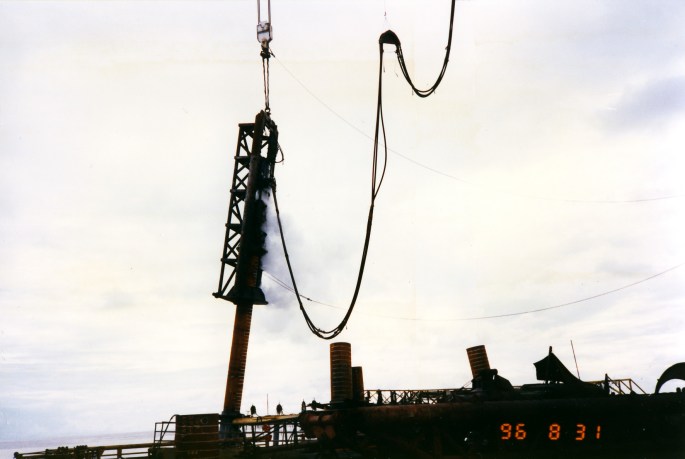
The concept of using sea water as the motive fluid for an underwater hydraulic hammer is an intriguing one. Doing so has two key advantages: Eliminates the use of hydraulic fluid, which can be environmentally hazardous (depends on the type); and Eliminates the need for a return line, irrespective of whether the pump/power pack is … Continue reading Sea Water Pile Hammer

Vulcan, Underwater and Hydraulic Hammers

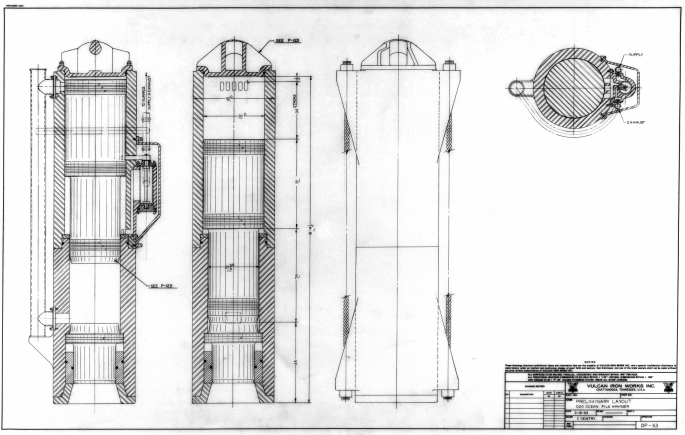
Vulcan never developed an underwater hammer of its own for offshore use. Although today use of these hammers for deep water projects is routine, the road to viable offshore hammers was a long one, even for companies better situated than Vulcan to get there. The Ocean Pile Hammer Vulcan's first underwater hammer was the Mariner … Continue reading Vulcan, Underwater and Hydraulic Hammers

Vulcan Offshore Hammers in Action

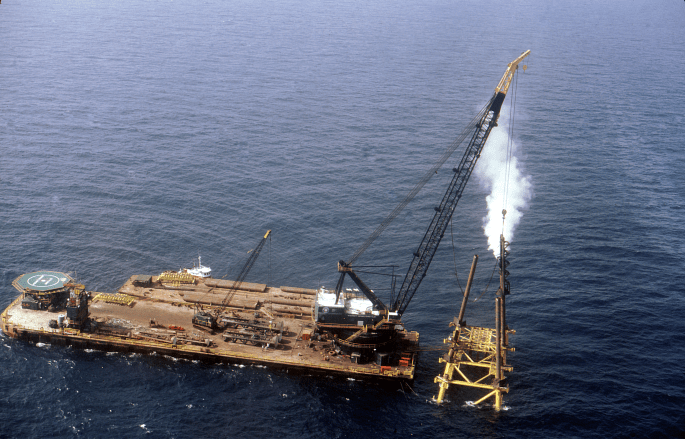
Vulcan hammers found themselves used literally all over the world; here are a few photos showing them "doing their stuff."  

Internal Pile Hammer IPH-16

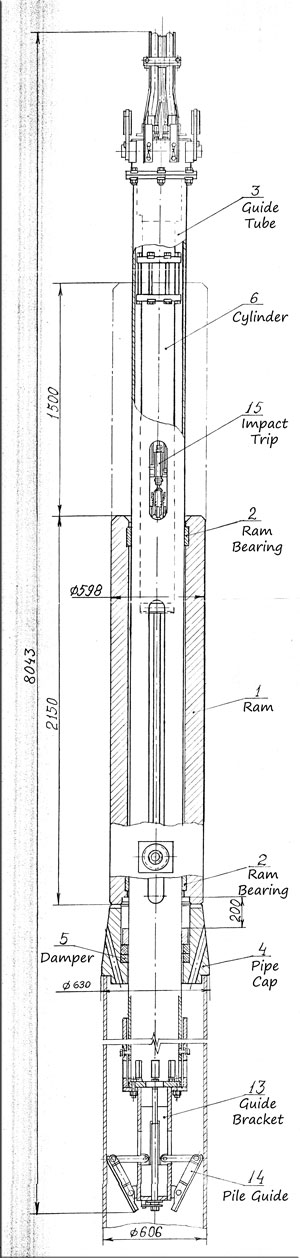
If you've looked at a conventional Vulcan, Conmaco or Menck air/steam hammer package for offshore use, you've noticed the hammer is surrounded by the leaders, which align the hammer to the pile. But what if the hammer could be self-aligning? In 1968 offshore contractor McDermott Inc. wanted to find out just that, and commissioned Vulcan … Continue reading Internal Pile Hammer IPH-16

Construction Assistance Vehicle (CAV)

Without a doubt the most intriguing "special product" Vulcan's West Palm Beach facility produced was the Construction Assistance Vehicle (CAV). The purpose of this was to provide an underwater craft to transport personnel and materiel during underwater construction. The CAV was capable of transporting one U.S. Ton (2000 lbs.) at a speed of 2 knots. … Continue reading Construction Assistance Vehicle (CAV)

Offshore Technology Conference

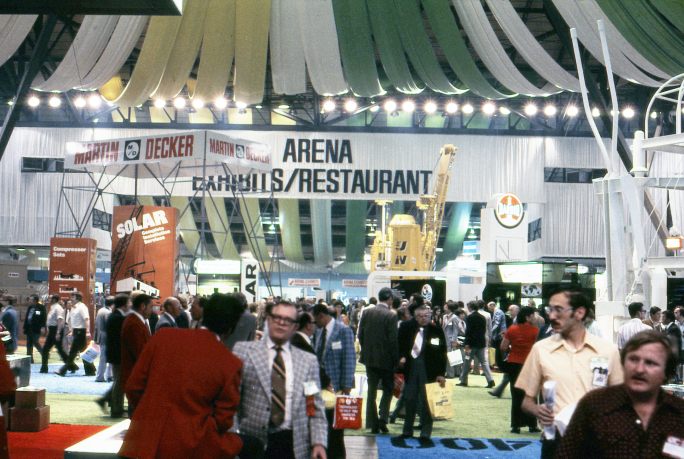
"Our feet are tired, our stomachs upset; our desks are ladened with work abandoned...our personal lives are in shambles, and, at the bottom line, our billfolds are empty." (Petroleum News Southeast Asia editorial on attending trade shows, February 1986) The official OTC logo. One of the industry events that Vulcan participated in over the years … Continue reading Offshore Technology Conference

It’s in the Details

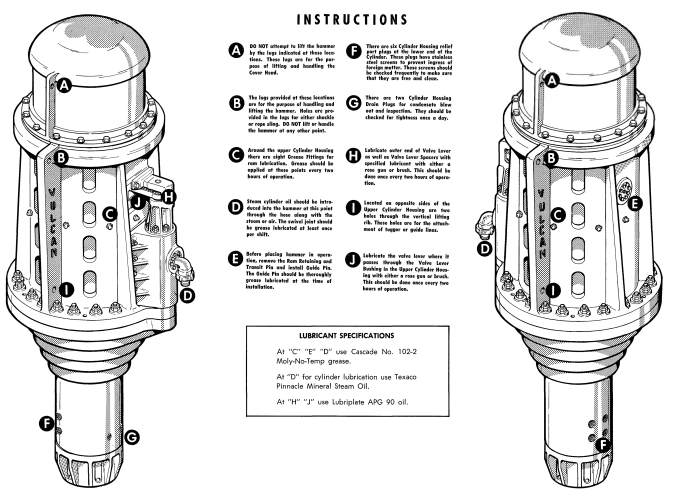
Vulcan hammers were justifiably admired for their simplicity. However, many of the keys to success were in two fields: their design and construction, and; how the hammer was equipped with its accessories. Here we feature a few of both; one or more of them may appear on or with your Vulcan hammer. For more practical … Continue reading It’s in the Details

Service: “Have Hammers, Will Travel”

Field service at Vulcan grew out of its offshore involvement. Up until the mid 1960's Vulcan relied on its dealers to service its equipment, but the specialised nature of the product and the demands of the application--especially the expensive downtime of an idle barge offshore--demanded that Vulcan keep on call service representatives willing and able … Continue reading Service: “Have Hammers, Will Travel”

Sales: Meeting the Customer’s Needs

Selling pile driving equiment--especially offshore--requires its own set of skills. Pile driving equipment is a "need-driven" product, i.e., a customer will not consider its purchase without a definite requirement for it. With this, a salesperson must have two attributes for success: a) a thorough knowledge of the product, its application and configuration, and b) a … Continue reading Sales: Meeting the Customer’s Needs