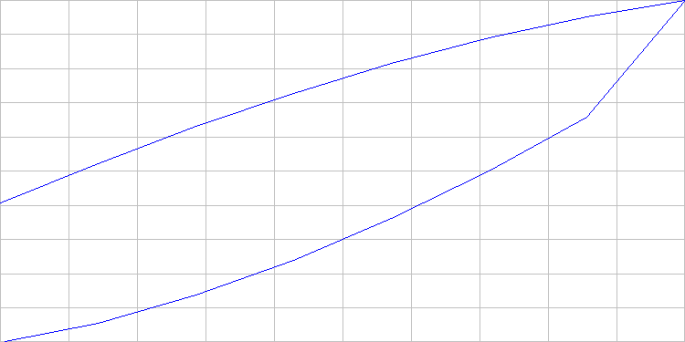
TAMWAVE 4: Shaft Resistance Profile, ALP and CLM2

TAMWAVE 3: Basic Results of Pile Capacity Analysis

Don Warrington's avatarvulcanhammer.net

With the soil properties and lateral loads finalised, we can proceed to look at the program’s static results.  These are shown below.  We will concentrate on cohesionless soils in this post; a sample case with cohesive results will come later.

Pile Data
Pile Designation12 In. Square
Pile MaterialConcrete
Penetration of Pile into the Soil, ft.100
Basic “diameter” or size of the pile, ft.1
Cross-sectional Area of the Pile, ft21.000
Pile Toe Area, ft21.000
Perimeter of the Pile, ft.4.000
Soil Data
Type of SoilSW
Specific Gravity of Solids2.65
Void Ratio0.51
Dry Unit Weight, pcf109.5
Saturated Unit Weight, pcf130.5
Soil Internal Friction Angle phi, degrees32
Cohesion c, psf
SPT N60, blows/foot20
CPT qc, psf211,600
Distance of Water Table from Soil Surface, ft.50
Penetration of Pile into Water Table, ft.50

View original post 1,894 more words

TAMWAVE 2: Modifying the Soil Properties

Don Warrington's avatarvulcanhammer.net

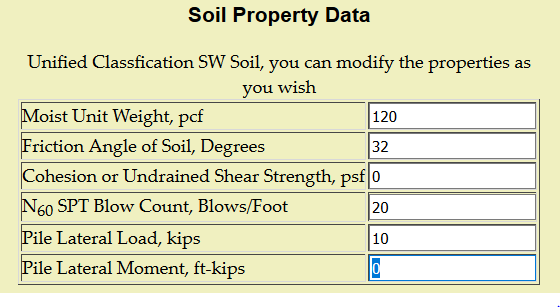
With the first step out of the way, we can proceed to the second: allowing the user to modify the properties of the soil.  This option must be used with care since it is easily possible to put together a set of soil properties that is physically unrealistic if not impossible.

Also, if you have chosen a sand or clay, you have chosen the methodology you will use.  Adding cohesion to a sand or gravel, for example, will have no effect on the subsequent performance of the model.

Finally, depending upon the choice of a free or fixed head, you are given the option of entering lateral loads and/or moments for the pile head.  In this case we have opted to add a lateral load of 10 kips to the pile and no moment.  The default is zero for both load and moment; this will produce some coefficients but…

View original post 5 more words

TAMWAVE 1: Entering Basic Soil and Pile Properties

Don Warrington's avatarvulcanhammer.net

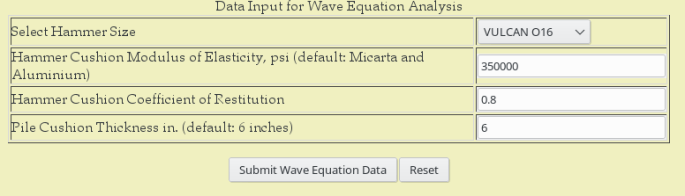
With a few preliminaries out of the way, we can proceed to discuss the new TAMWAVE routine, which can be found here.

What is TAMWAVE?

TAMWAVE stands for Texas A&M Wave Equation.  The TTI wave equation was developed at Texas A&M in the late 1960’s and early 1970’s, and was a successor to Smith’s original wave equation program.  In reality this is more than a wave equation program; it is a driven pile analyser which, in addition to the wave equation program, analyses the static performance of a driven pile for both axial and lateral loads.  It is not intended to be used on actual projects, but as an educational tool for students.  Most of the software in current use is expensive, and predecessors such as SPILE, WEAP87 or COM624 are hard to use (they’re DOS programs) or methodological obsolescence issues.  (With WEAP87, there are not as…

View original post 832 more words

Relating Hyperbolic and Elasto-Plastic Soil Stress-Strain Models

It is routine in soil mechanics to attempt to use continuum mechanics/theory of elasticity methods to analyse the stresses and strains/deflections in soil. We always do this with the caveat that soils are really not linear in their response to stress, be that stress axial, shear or a combination of the two. In the course […] … Continue reading Relating Hyperbolic and Elasto-Plastic Soil Stress-Strain Models

We’ve Moved At Last, But Took the Online Pile Routines Somewhere Else

After a summer of eclipses and hurricanes, we're pleased to announce that vulcanhammer.info has finally moved to its new platform as of yesterday.  Click here and check out what we have to offer.  Most of the content has gone with the site; we've added many photographs and used the transition to correct many of the … Continue reading We’ve Moved At Last, But Took the Online Pile Routines Somewhere Else

Vulcan’s Centennial Celebration

The centennial celebration was one of the finest gala events -- and certainly the best documented -- that Vulcan ever put on. Following are some facts about the celebration: The banquet took place on 31 January 1952. It was scheduled to coincide with the end of the AED (Associated Equipment Distributors) meeting in Chicago. The … Continue reading Vulcan’s Centennial Celebration

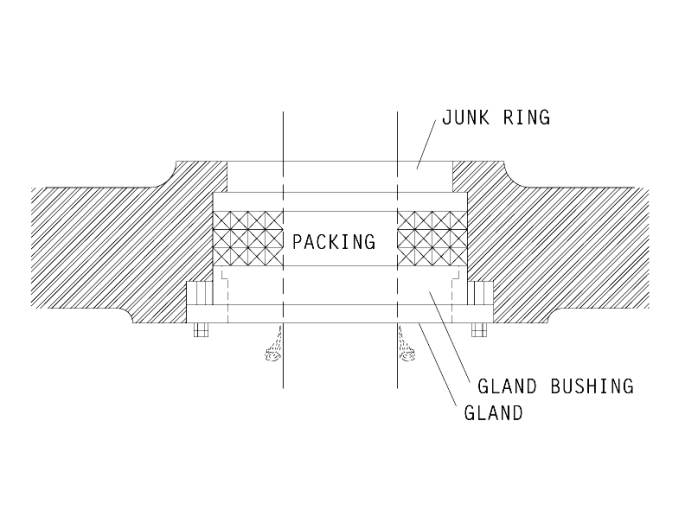
Vulcan Offshore Tip #3: Tightening the Packing Gland

Many Pile Hammer mechanics have a tendency to tighten the Packing Gland too tight. A little steam or air leaking through the Packing is not objectionable. The oil mixed with the escaping air or steam will lubricate the Packing and Piston Rod.