Welcome to vulcanhammer.info, the site about Vulcan Iron Works, which manufactured the durable air/steam line of pile driving equipment for more than a century. Many of its products are still in service today, providing reliable performance all over the world. There’s a lot here, use the search box below if you’re having trouble finding something. Also look at the end of an article, there are helpful links to more information with every post.
Frequently in the course of designing a foundation, the dimensions of the cushion block are necessary for purposes of computing its stiffness for the wave equation analysis. Below are the cushion pot dimensions for our air/steam hammers:
Note: Tip date 1 August 1980. Hammers and accessory dimensions have been added to the list to include onshore hammers and offshore hammers developed after that date. All additions are shown in italics.
Following is an explanation of how these configurations actually look on Vulcan hammers.
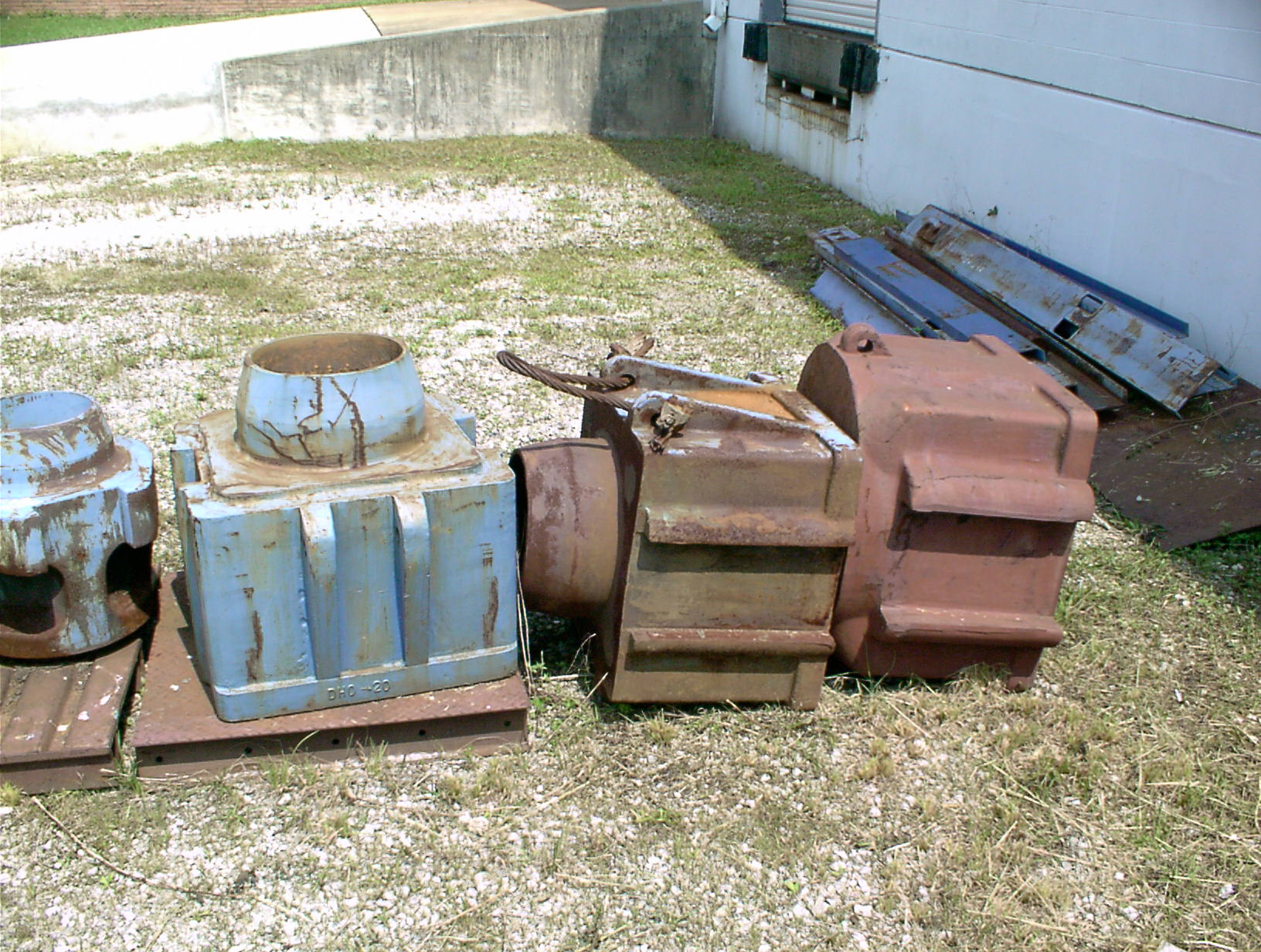
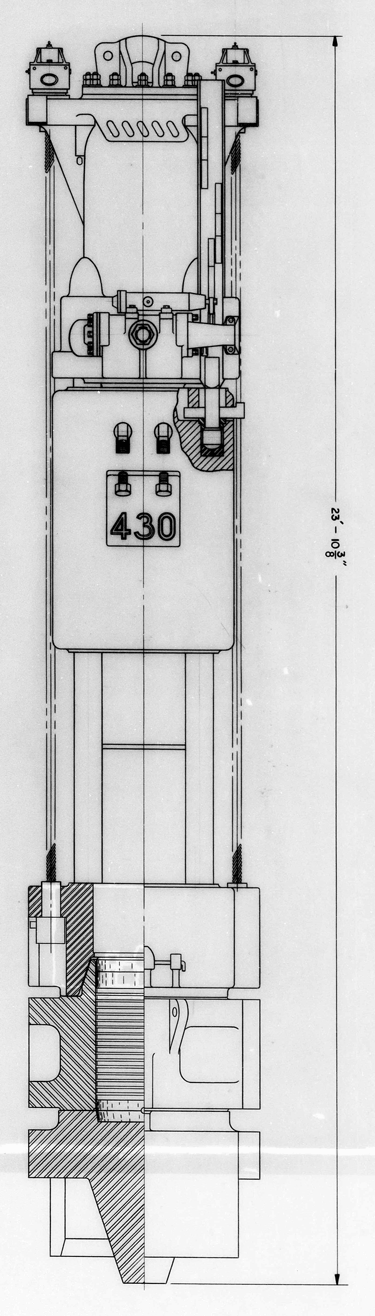
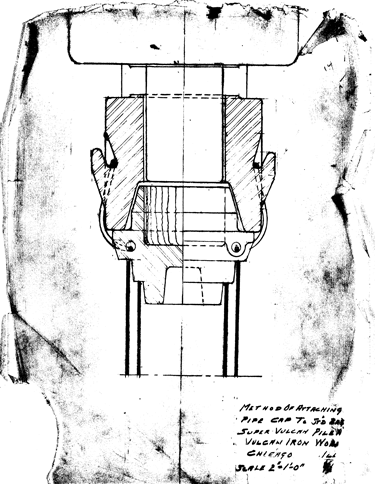
An offshore hammer with a capblock follower and concrete driving head. The Vulcan 430 was never built, but the Vulcan 530 and 535 (in the same family) certainly were. The capblock follower is cabled to the hammer base and the cap is in turn cabled to the capblock follower. The higher cushion stack enabled the use of the stiffer micarta and aluminium cushion stack, which is also shown. This cushion configuration was first developed by Raymond, and the drawing at the right shows a Raymond-style capblock with a key plate aligning the capblock follower and driving accessory. The drawing above it shows a Vulcan-style capblock with a lip on the follower doing the aligning. Raymond also used a little different terminology. They would refer to the piece which surrounding the micarta and aluminium cushion stack as a “capblock shield” and the driving accessory as the “follower.”The integral ring cap and how it is cabled to the hammer. Vulcan never issued a specification as to how long the cables should be (and how much slack is to be allowed in the movement between the hammer base and the driving accessory.) This depends upon the nature of the driving and the rebound of the pile, which in turn depends upon the resistance of the soil and the impedance of the pile.


 vulcanhammer.info
11 thoughts on “Vulcan Offshore Tip #20: Cushion Pot Dimensions”