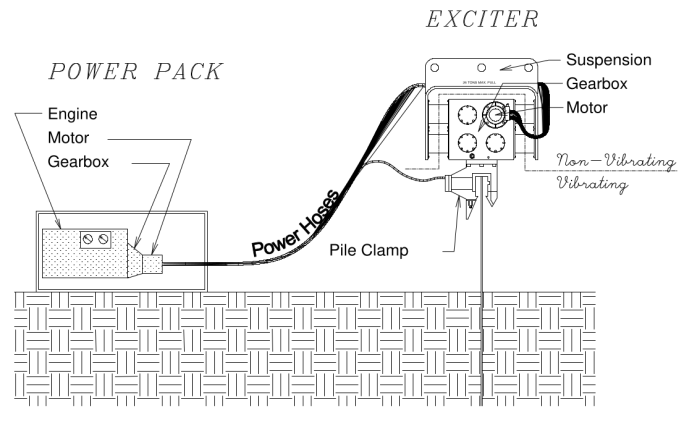
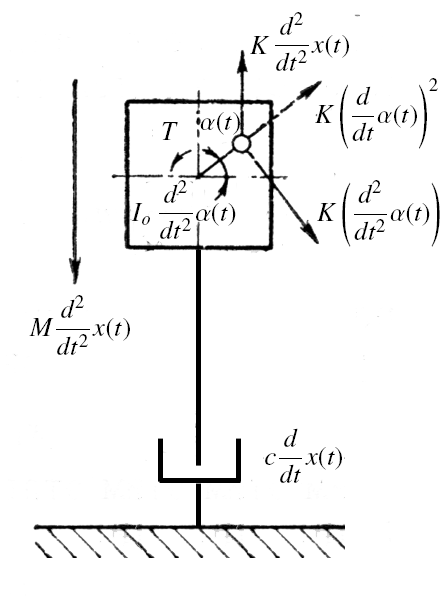
This is a brief summary of the basic theory behind vibratory power. It goes back to Savinov and Luskin (the original summary of the development of the technology) and I've covered it repeatedly in my monographs. The basic model is shown above. It assumes that that soil acts as a velocity-dependent damper, which speaks to … Continue reading The Basics of Vibratory Power Theory
Tag: math
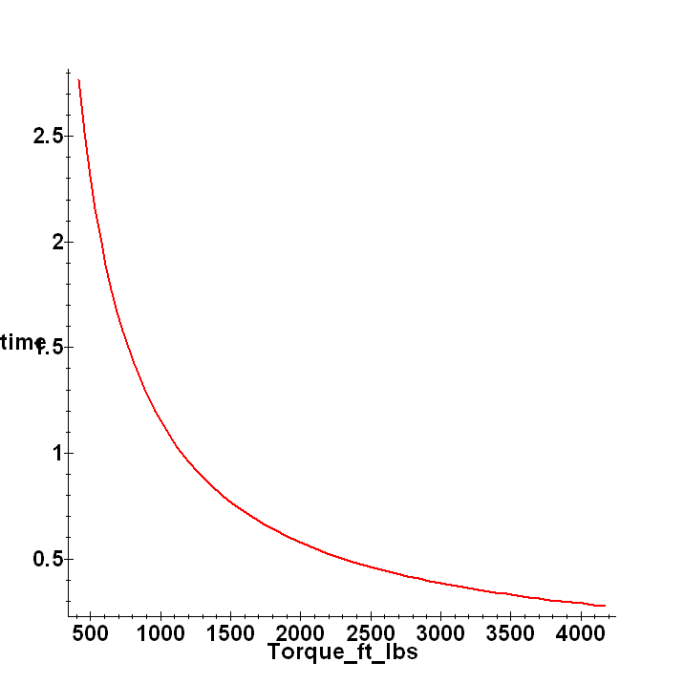
Estimating the Starting Time of a Vulcan Vibratory Hammer
The 1400, driving sheeting for a creosote plant environmental remediation in Chattanooga. The 1400 incorporated many of the features of the 400, including the curved eccentric case (which was mated to the 7" clamp.) The original suspension was an H-beam, but this proved too light for bias weight, and was replaced by the cast unit … Continue reading Estimating the Starting Time of a Vulcan Vibratory Hammer
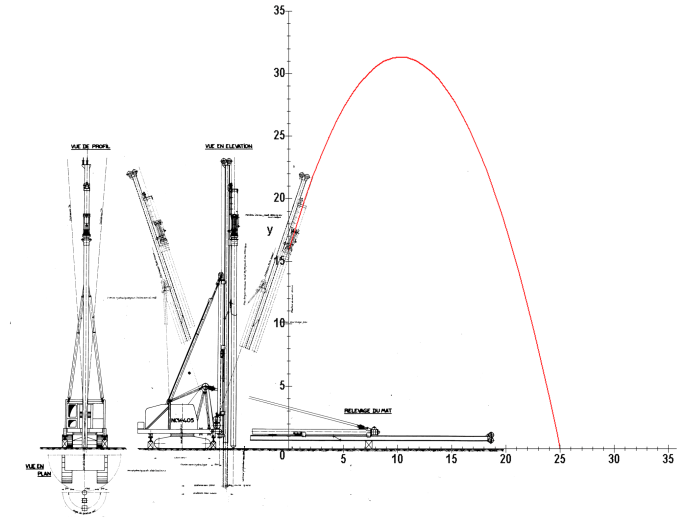
Projectile Motion, or Why You Don’t Put Starter Fluid in a Diesel Hammer
We've been posting some pretty technical stuff lately. While there is a good deal of that here, we're going to use this to illustrate two things: how projectile motion works and why you shouldn't put starter fluid in a diesel hammer. The Situation Let's consider the situation where the contractor brought the rig illustrated below … Continue reading Projectile Motion, or Why You Don’t Put Starter Fluid in a Diesel Hammer
The Kinematics and Kinetics of Vibratory Driver Eccentric Rotation
The basic mechanics of vibratory pile drivers, i.e., those which drive with vibration and without impact, are well documented. This is a more detailed look at their kinematics (and some of their kinetics) which will show, at the least, that these aren't just pulled out of the air but have some basis in the dynamics … Continue reading The Kinematics and Kinetics of Vibratory Driver Eccentric Rotation
The Basics of Setting the Cut-Off Point for a Vulcan Single-Acting Hammer
The issue of slide bars, full and short stroking and blow rate have always been central to the proper "certification" and operation of Vulcan hammers. In this post we will take a "bare bones," basic approach to the dynamics of the problem with the most basic automatic hammer of all: a single-acting air/steam hammer, in … Continue reading The Basics of Setting the Cut-Off Point for a Vulcan Single-Acting Hammer
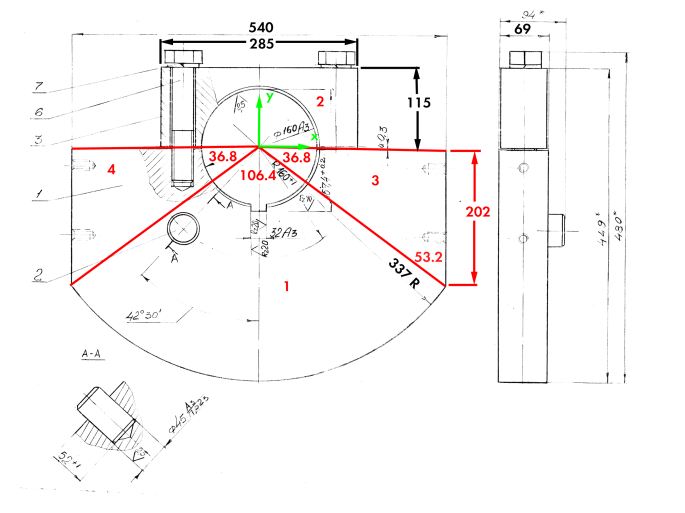
Determining the Eccentric Moment, Rotational Inertia and Pendulum Frequency for a Vibratory Eccentric
In the post Checking the Soviets: Determining the Eccentric Moment, we discussed the process of determining this parameter and more for a vibratory eccentric. The importance of the pendulum frequency--and the way that rotational moment of inertia and mass moment of inertia can easily be related with this kind of configuration--was discussed in Two Papers on … Continue reading Determining the Eccentric Moment, Rotational Inertia and Pendulum Frequency for a Vibratory Eccentric
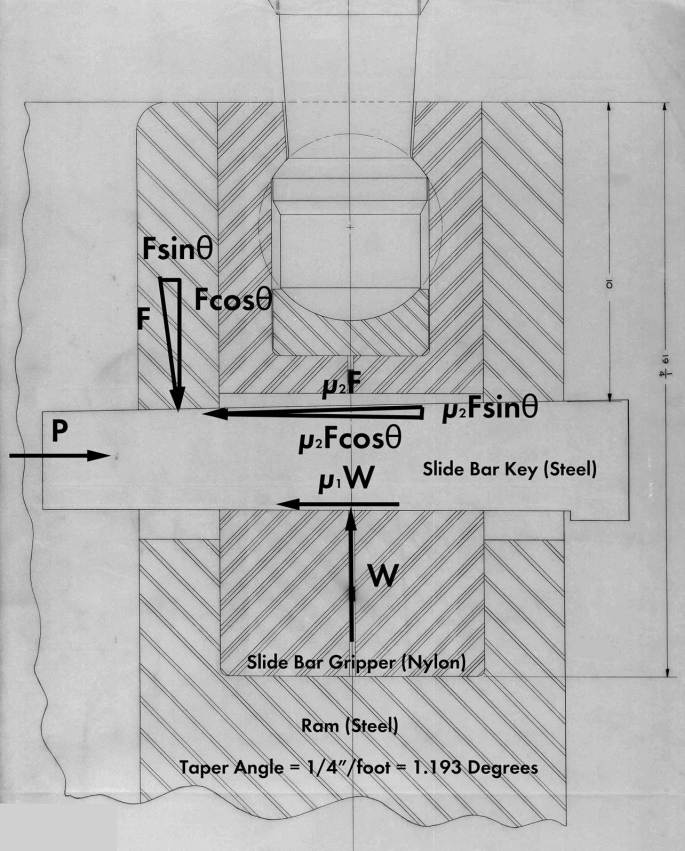
An Example of a Self-Locking Wedge: the Vulcan 560 Slide Bar Key
In the earlier post Tapered Keys and Their Use In Vulcan Hammers we had a general discussion of tapered keys, the theory behind them and their application in Vulcan hammers. In this post we'll look at one specific application--the Vulcan 560 Slide Bar Key--and see how Coulombic friction applies in this case of a self-locking (hopefully) … Continue reading An Example of a Self-Locking Wedge: the Vulcan 560 Slide Bar Key
Driven Pile Design: Wave Equation Analysis
More Resources Foundation Design and Analysis: Deep Foundations, Pile Dynamics Design and Construction of Driven Pile Foundations, 2016 Edition. The second volume covers this topic. Overview Now we come to the topic that was the genesis of this and the related sites: pile dynamics. There's quite a lot on the subject, so an extensive review … Continue reading Driven Pile Design: Wave Equation Analysis