Hauling the “Lighter” Up With a Davit, and An Example of Static Analysis

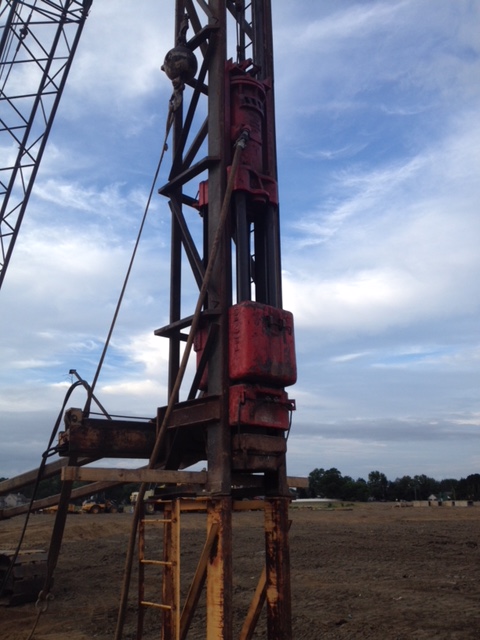
Vulcan produced many products for the coastal and marine industry. When it started producing pile hammers in Chicago, the Loop was moving to other types of foundations. Vulcan--and the Warrington family--was focused on the waterfront, which literally took it all over the world. An example of that is something closer to home: the yard yacht … Continue reading Hauling the “Lighter” Up With a Davit, and An Example of Static Analysis
Some Insight into the Origin of Vulcan’s Pile Hammer Valve System

Much of the narrative around Vulcan centres on the development of the Warrington-Vulcan pile hammer design in the late 1880's (and the serial number records aren't the most informative about when exactly the final transition to that design was made.) But how did Vulcan come up with the valve design it made its standard? Some … Continue reading Some Insight into the Origin of Vulcan’s Pile Hammer Valve System

The Hicks Track Laying Machine, and an Example of Belt/Band Friction

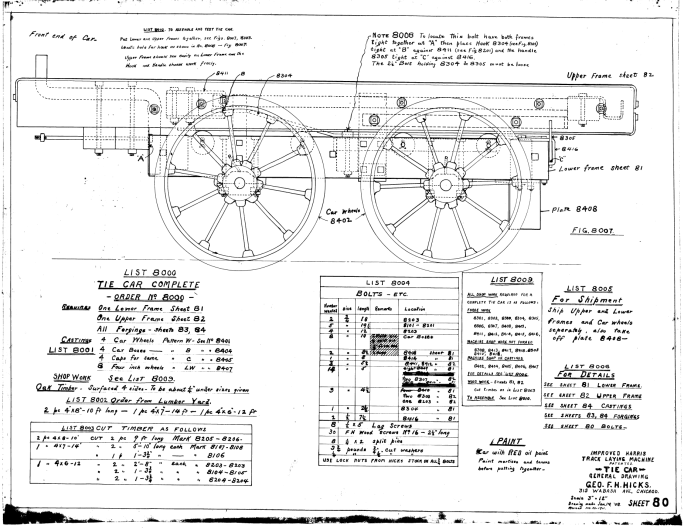
As noted elsewhere, Vulcan got itself into many products outside of pile driving equipment. One of those was railroad equipment. Some of these didn't work out as planned, as was the case with the Caldwell Steam Snow Plow. Others, ostensibly, had a happier outcome for everyone. In the absence of evidence to the contrary, one of … Continue reading The Hicks Track Laying Machine, and an Example of Belt/Band Friction

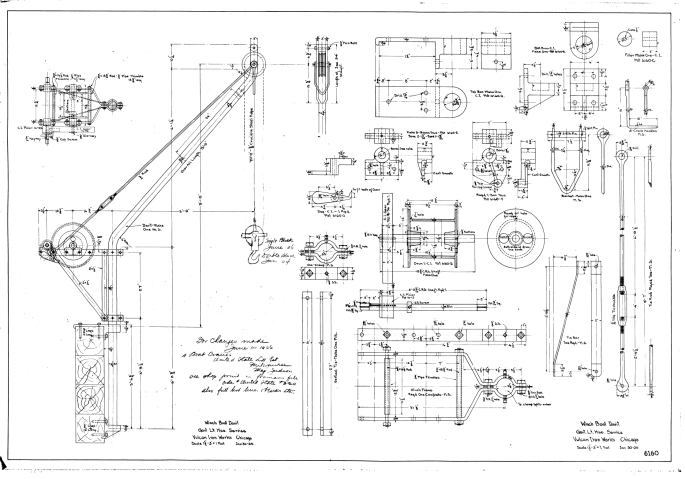
A Vulcan Jib Crane, and an Example of a “Two-Force Member”

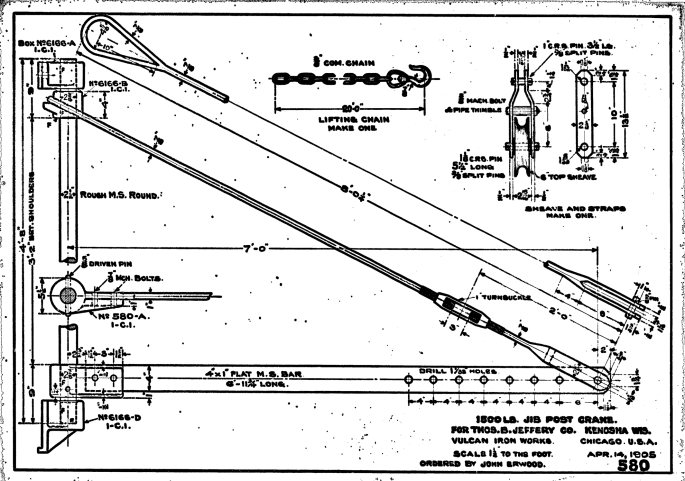
As this site has documented, Vulcan produced more than pile driving equipment, especially in the years before World War I. One of those is the 1500 lb. jib post crane depicted above, which Vulcan produced for the Thomas B. Jeffery Company in Kenosha, WI, an automobile manufacturer. (It ultimately became Nash motors, which in turn … Continue reading A Vulcan Jib Crane, and an Example of a “Two-Force Member”

1920 Vulcan Catalogue of Pile Driving Machinery

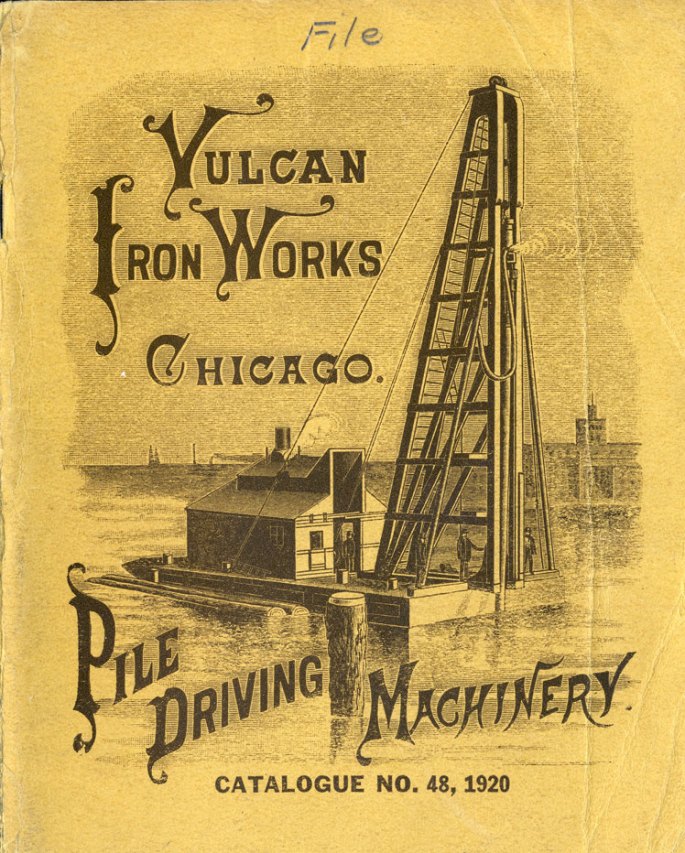
As a way of starting off the new year, and at the request of one our visitors (and someone who facilitated saving much of this information, thanks) here is presented Vulcan Catalogue No. 48, 1920, which can be downloaded here. I've used material from this particular catalogue in the past. This is the first catalogue … Continue reading 1920 Vulcan Catalogue of Pile Driving Machinery

The Basics of Setting the Cut-Off Point for a Vulcan Single-Acting Hammer

The issue of slide bars, full and short stroking and blow rate have always been central to the proper "certification" and operation of Vulcan hammers. In this post we will take a "bare bones," basic approach to the dynamics of the problem with the most basic automatic hammer of all: a single-acting air/steam hammer, in … Continue reading The Basics of Setting the Cut-Off Point for a Vulcan Single-Acting Hammer

An Example of a Self-Locking Wedge: the Vulcan 560 Slide Bar Key

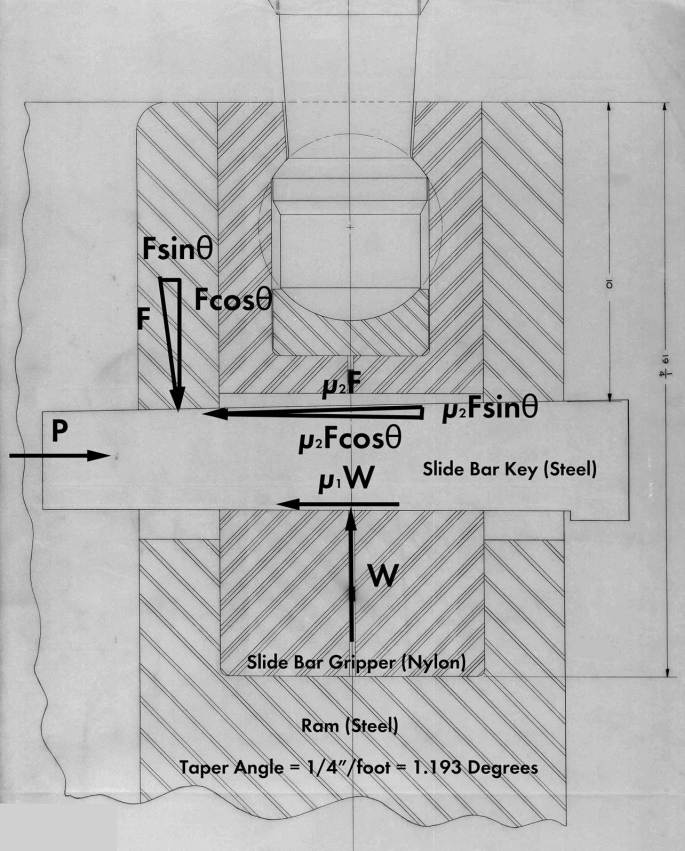
In the earlier post Tapered Keys and Their Use In Vulcan Hammers we had a general discussion of tapered keys, the theory behind them and their application in Vulcan hammers. In this post we'll look at one specific application--the Vulcan 560 Slide Bar Key--and see how Coulombic friction applies in this case of a self-locking (hopefully) … Continue reading An Example of a Self-Locking Wedge: the Vulcan 560 Slide Bar Key

An Example of Balancing a Sling Picked-Up Load: the IPH-16

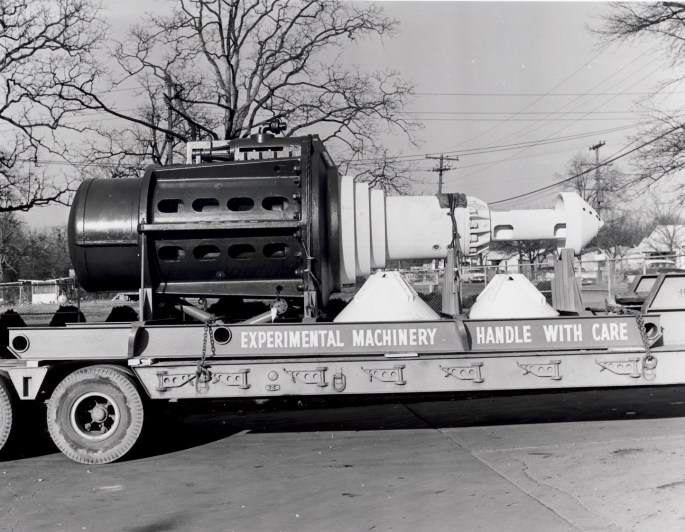
A common problem in elementary statics is picking up a load with a sling. It's an important one in heavy lifting, and Vulcan certainly experienced a great deal of that. We're going to look at an example: the Internal Pile Hammer IPH-16. It's shown with its skid on the truck above; we're going to look … Continue reading An Example of Balancing a Sling Picked-Up Load: the IPH-16

Holes had to be punched through concrete for these piles

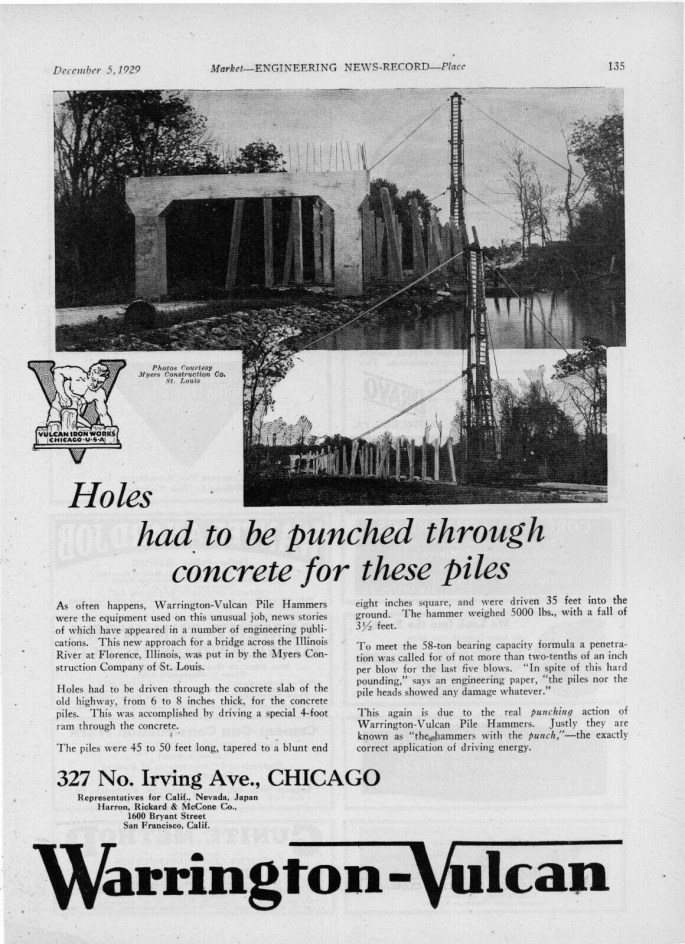
This is another ad in our series of Vulcan ads from the 1920's, in this case appearing in the 5 December 1929 issue of Engineering News-Record. But this ad is a departure from the others in several respects. It's not clear from the photos or ad copy what kind of hammer this actually is. The … Continue reading Holes had to be punched through concrete for these piles

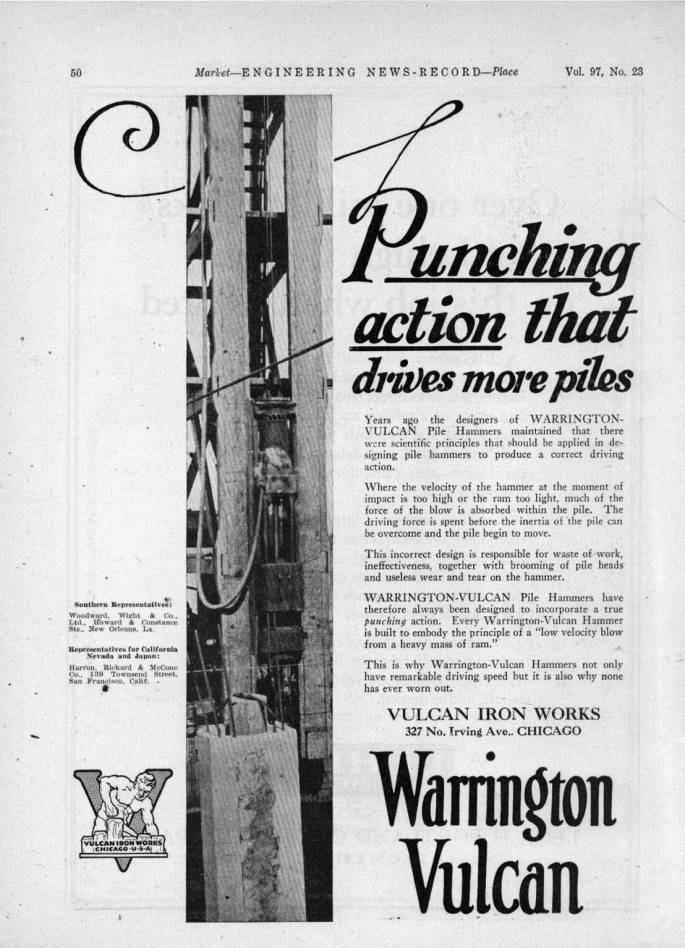
Punching action that drives more piles

Another classic Vulcan ad, this one appeared in the 2 December 1926 edition of Engineering News-Record. It hits (sorry!) on one of Vulcan's favourite themes, namely that of "heavy ram-short stroke," which was Vulcan's design philosophy for most of its existence (or at least until the 560.) The ad explains the superiority of this concept … Continue reading Punching action that drives more piles