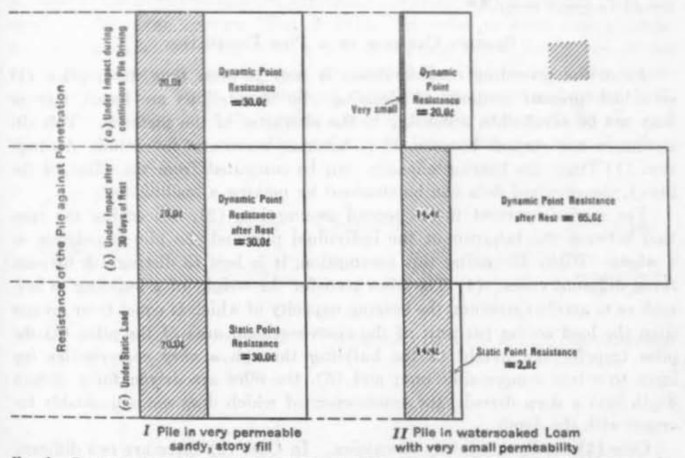
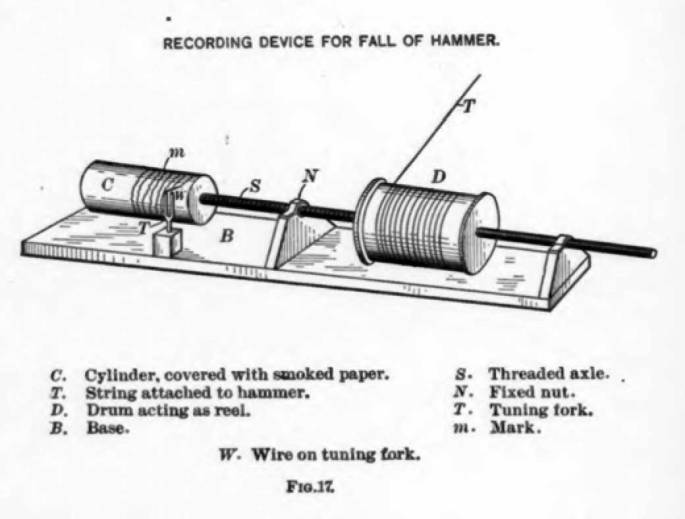
The results of the Proctorsville project showed that our understanding of the mechanics of pile driving—and of the load transfer mechanism between pile and soil during and after installation—left a great deal to be desired. The solution to the problem was to instrument the pile driving process. Such an effort was documented in the 1908 … Continue reading Goodrich (1908): The First Instrumented Pile?
Tag: science
Comments on “Nonlinear fictitious-soil pile model for pile high-strain dynamic analysis” and “Fictitious soil pile model for dynamic analysis of pipe piles under high strain conditions”
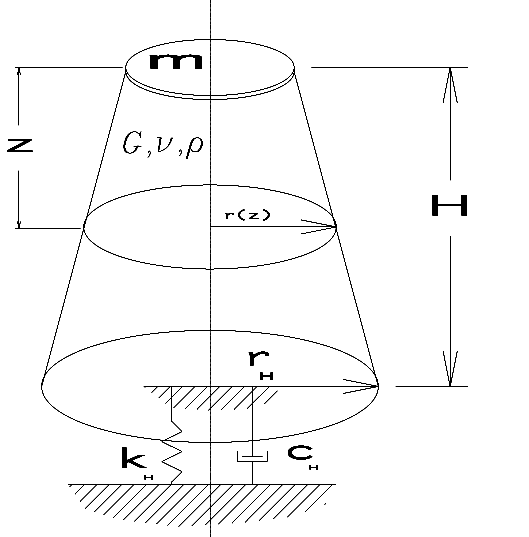
It's my custom to review papers which cite my own work. This pair of papers, whose lead author is Tu Yuan from Zhejiang Sci-Tech University in Hangzhou, China, is interesting because it take an approach whose basic concept goes back a long way in pile dynamics and which needed some basic advancement. The two papers … Continue reading Comments on “Nonlinear fictitious-soil pile model for pile high-strain dynamic analysis” and “Fictitious soil pile model for dynamic analysis of pipe piles under high strain conditions”
Diesel Hammers: Pileco
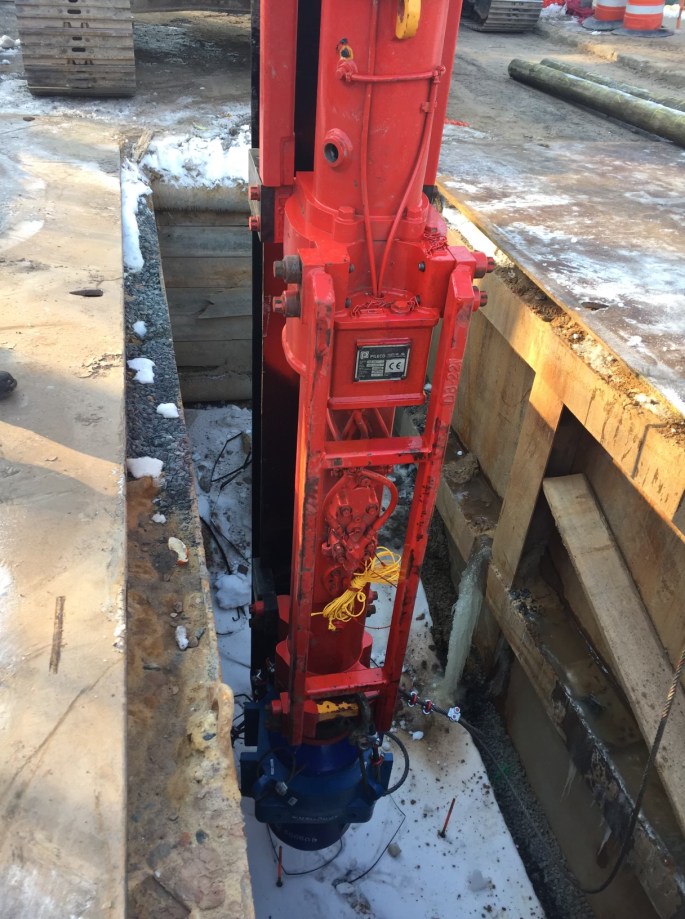
Above: Pileco D-8 diesel hammer on Vulcan Foundation Equipment's excavator mast, ready to drive below grade. Photo courtesy of Vulcan Foundation Equipment. Since we dealt with older European diesel hammers in the post Diesel Hammers: Delmag, Nilens and the Method of Analysis, let's turn to something more contemporary: Pileco diesel hammers, one of several organisations which … Continue reading Diesel Hammers: Pileco
Diesel Hammers: Rated Striking Energy, and Should Diesel Hammers Be Derated?
Now we get into a topic that's potentially controversial: the energy rating of diesel hammers, or any impact hammer for that matter. Let's start with defining what we mean by rated energy. Efficiency and Rated Striking Energy Hibbeler (1989) defines mechanical efficiency as follows: $latex e = \frac{Energy\,Output}{Energy\,Input} $ (15) A quick look at Equation … Continue reading Diesel Hammers: Rated Striking Energy, and Should Diesel Hammers Be Derated?
Diesel Hammers: Some Basic Thermodynamics, and the Mean Effective Pressure
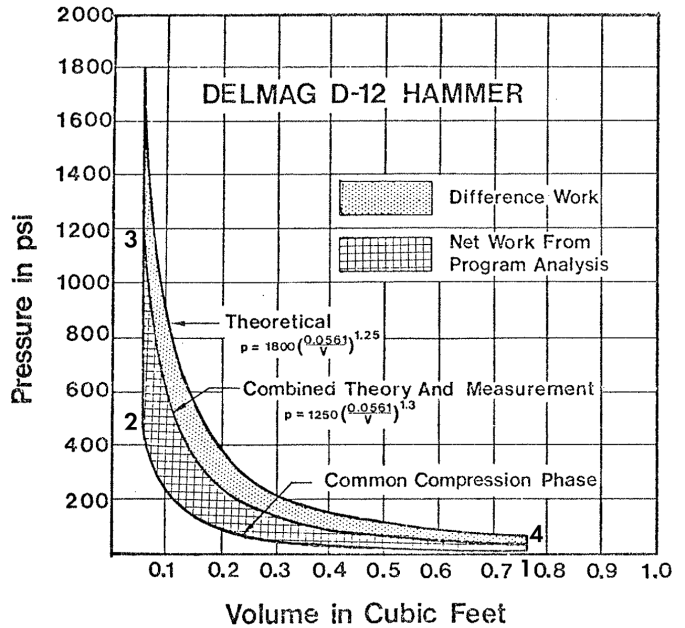
With recent upheaval over tariffs and our long-term commercial relationship with China, one is led to wonder: is the era of the "Chimags" at an end? Or at least not what it used to be? And could another different diesel hammer be manufactured in the U.S. (yes, there are other manufacturers)? In this series we'll … Continue reading Diesel Hammers: Some Basic Thermodynamics, and the Mean Effective Pressure
Comments on “A novel soil reaction model for continuous impact pile driving”
This is yet another paper which cited my work, in this case the ZWAVE paper. Once again I'm not sure why they picked this one; it's probably because I explored a soil model based on that of Randolph and Simons (1986), which they also cited and discussed. I came back to models like this in … Continue reading Comments on “A novel soil reaction model for continuous impact pile driving”
The Kinematics of Diesel Fuel Pump Cams
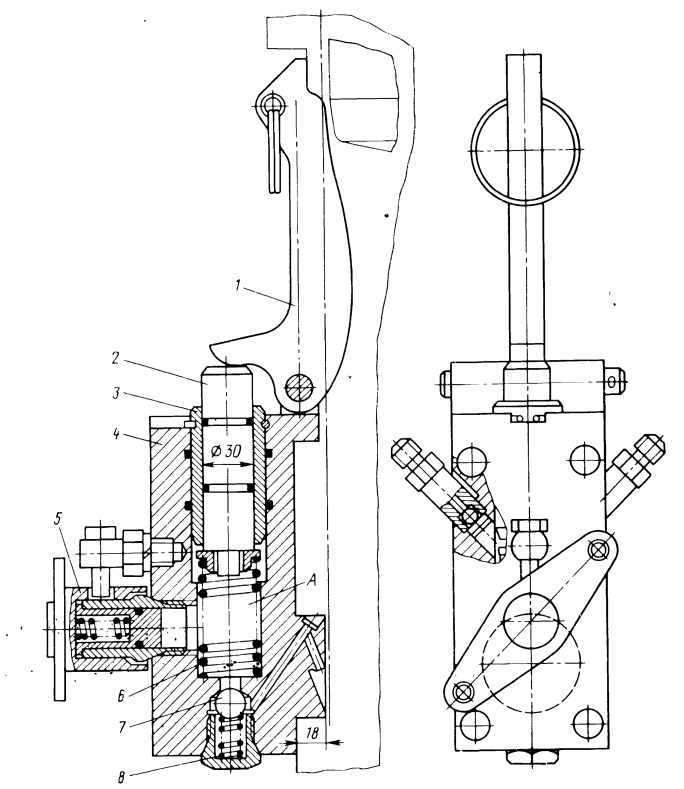
This is an overview of the motion of the "standard" type of diesel fuel pump cam which is used to deliver fuel from the fuel tank to the combustion chamber of a single-acting, tubular type of diesel hammer. What are Kinematics? As defined in Seely and Ensign, "Kinematics deals with the relation between distance, time, … Continue reading The Kinematics of Diesel Fuel Pump Cams
The Hicks Track Laying Machine, and an Example of Belt/Band Friction
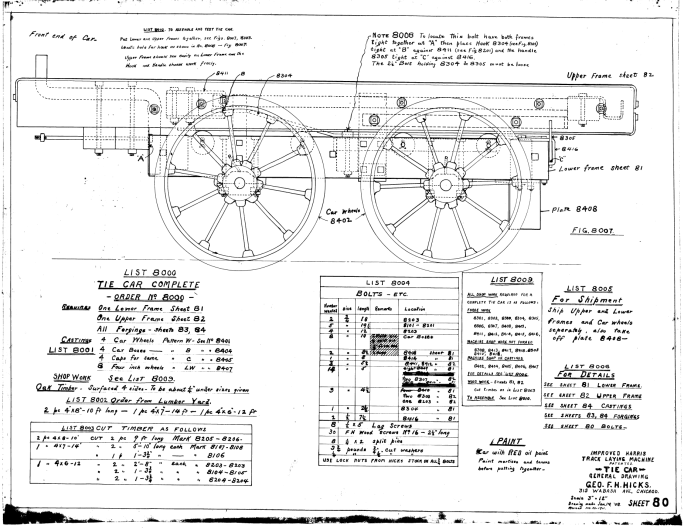
As noted elsewhere, Vulcan got itself into many products outside of pile driving equipment. One of those was railroad equipment. Some of these didn't work out as planned, as was the case with the Caldwell Steam Snow Plow. Others, ostensibly, had a happier outcome for everyone. In the absence of evidence to the contrary, one of … Continue reading The Hicks Track Laying Machine, and an Example of Belt/Band Friction
The Basics of Vibratory Power Theory
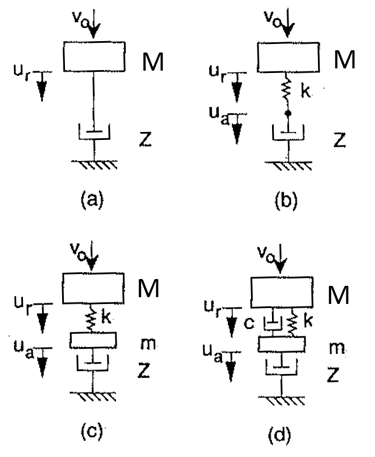
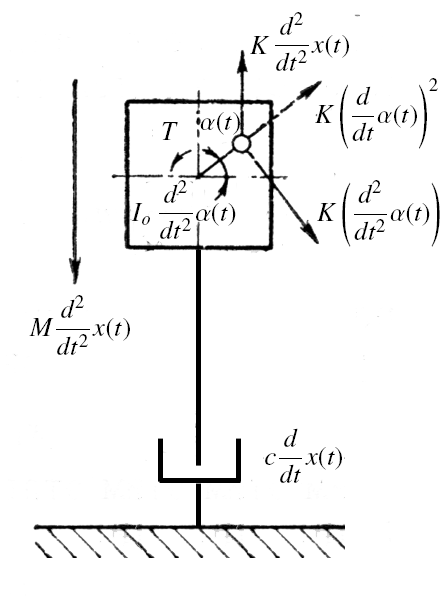
This is a brief summary of the basic theory behind vibratory power. It goes back to Savinov and Luskin (the original summary of the development of the technology) and I've covered it repeatedly in my monographs. The basic model is shown above. It assumes that that soil acts as a velocity-dependent damper, which speaks to … Continue reading The Basics of Vibratory Power Theory
Projectile Motion, or Why You Don’t Put Starter Fluid in a Diesel Hammer
We've been posting some pretty technical stuff lately. While there is a good deal of that here, we're going to use this to illustrate two things: how projectile motion works and why you shouldn't put starter fluid in a diesel hammer. The Situation Let's consider the situation where the contractor brought the rig illustrated below … Continue reading Projectile Motion, or Why You Don’t Put Starter Fluid in a Diesel Hammer