


February 24, 1839 Civil engineer William Smith Otis of Philadelphia was issued U.S. patent number 1,089 for the steam shovel, which was classified in that patent as a “Crane-Excavator for Excavating and Removing Earth.” As designed by Otis, this large steam-powered machine — when mounted on wheeled devices such as carriages or railroad cars — […]
1839: A U.S. Patent is Granted for a Groundbreaking Machine for Major Transportation Projects — Transportation History
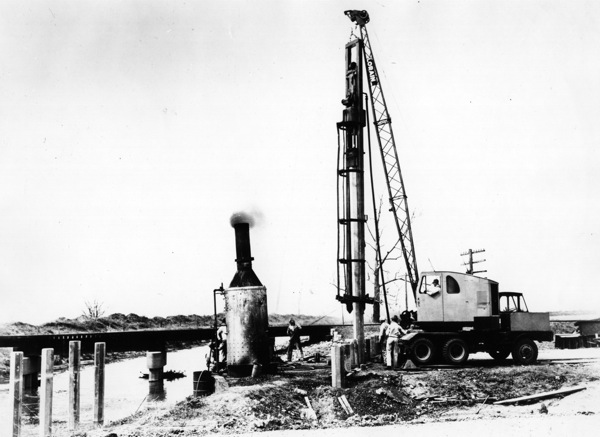
The use of steam in construction equipment was a key in the development of the “automated” pile hammer (as opposed to the drop hammer, although their cranes came to be driven by steam, too.) Steam was the main driver for Vulcan hammers from the beginning in the late 1880’s to the 1930’s, and again when Vulcan went offshore in the 1960’s.


 vulcanhammer.info